Advanced Level 2 and 3 Puzzle Feeders: High-Stamina Mental Workouts for Smog Lockdown Days
Some links on this site may be affiliate links. As an Amazon Associate, we may earn from qualifying purchases at no extra cost to you.
Understanding Advanced Level 2 and 3 Puzzle Feeders
When the outdoor Air Quality Index crosses 450 in mid-November and stepping onto the balcony makes your throat scratch, taking your high-energy dog for a vigorous 5km run is out of the question.
Athletic dogs still wake up with boundless physical energy, and after forty-eight hours of restricted five-minute relief walks, indoor cabin fever sets in. Dogs express pent-up frustration through persistent whining, pacing, demand barking, or chewing on door frames. Physical confinement without mental stimulation creates intense canine anxiety and household stress.
Key Factors when Evaluating Advanced Level 2 and 3 Puzzle Feeders
During our first severe November smog wave in Delhi NCR, Shiro went stir-crazy. He was two years old, bursting with retriever energy, and being confined to short potty walks made him turn our apartment upside down. He would pick up sofa cushions, pace the hallways, and bark at the front door. We tried throwing tennis balls down the hallway, but galloping on marble tiles was terrible for his hips, and heavy panting in hazy indoor air left him coughing.
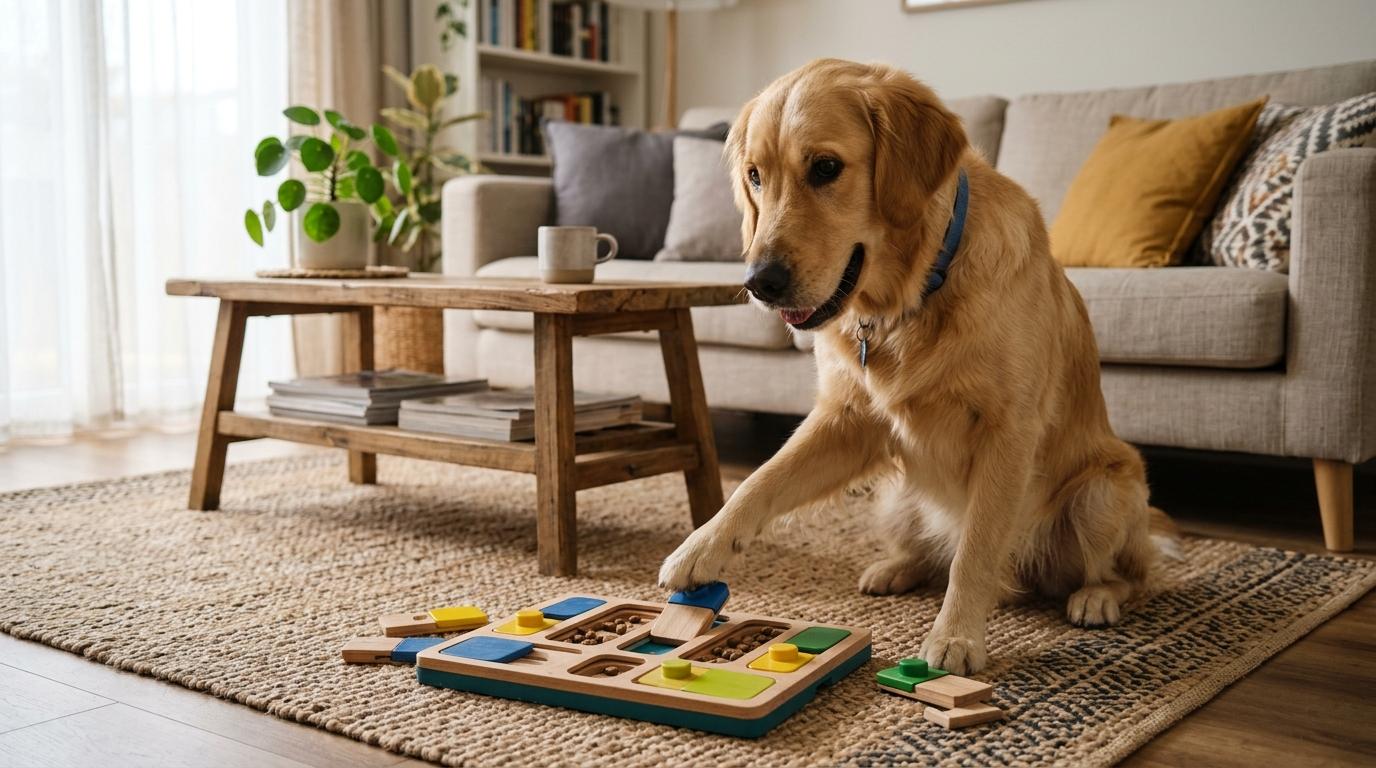
That week, a canine behaviorist friend introduced us to Nina Ottosson puzzle games. We started with the Dog Brick, teaching Shiro how to lift bone-shaped handles and slide horizontal tiles with his nose to reveal hidden freeze-dried lamb treats. The first time he solved all twelve compartments, he sighed happily, circled three times on his rug, and slept soundly for three straight hours. Mental enrichment became our ultimate superpower for surviving smog season.
- Fifteen minutes of concentrated canine scentwork and sequential problem-solving burns as much mental stamina as an hour of physical running.
- Level 2 and 3 puzzles require multi-step operations like unlocking rotating peg locks before sliding covers can open, engaging executive canine brain functions.
- Wobble dispensers require dogs to use paw and nose coordination to tip kibble out, prolonging a two-minute meal into a 20-minute foraging adventure.
- Mental exhaustion triggers natural serotonin and dopamine release, leaving dogs relaxed, quiet, and deeply content.
Top Picks for Advanced Level 2 and 3 Puzzle Feeders
Nina Ottosson by Outward Hound Dog Brick Level 2 Interactive Puzzle
₹₹Best for: The benchmark interactive cognitive puzzle for intermediate problem-solving dogs
Features three distinct treat-seeking challenges: flip-open lids, sliding tiles, and removable white bone puzzle locks. Dogs must remove the bone locks before sliding compartments will budge.
Pros
- Engaging multi-step sequential logic
- Durable food-safe BPA-free plastic
- Easy to wash with warm soapy water
Tradeoffs
- Bone locks can get chewed if not removed after session
KONG Wobbler Interactive Treat Dispensing Dog Toy
₹₹Best for: Turning regular dry kibble meals into a 20-minute physical and mental workout
An oversized, weighted KONG-shaped dispenser that sits upright until nudged by a dog's paw or nose. Wobbles unpredictably, dispensing food through a small hole.
Pros
- Nearly indestructible food-grade polymer
- Unscrews in half for easy filling and cleaning
- Keeps high-energy dogs fully occupied
Tradeoffs
- Noisy when rolled on bare hard tiles, best used on a rug
Trixie Pet Products Activity Poker Box Advanced Cognitive Strategy Game
₹₹₹Best for: Advanced canine geniuses needing complex mechanical challenges
Contains four distinct puzzle boxes on a single base: lids with knobs, sliding drawers, ropes to pull, and lever pedals to press. Each box requires a unique physical action.
Pros
- Four independent problem-solving mechanisms
- Rubber feet prevent sliding on floors
- Includes comprehensive training booklet
Tradeoffs
- Requires human supervision to reset compartments
Who Will Benefit Most
Always start puzzle toys on the easiest setting without locking pegs for the first two sessions, ensuring your dog builds confidence and learns the basic mechanics.
Calculate the treats used during puzzle sessions into your dog's total daily food portion to prevent unwanted winter weight gain while exercise is limited.
When to Consider Alternatives
Do not leave puzzle toys unattended with unsupervised dogs; frustrated dogs will chew through plastic sliding panels to access food directly rather than solving the puzzle.
Avoid flimsy cardboard puzzle boxes that easily shred into damp cellulose paper when moistened by enthusiastic dog tongues.
Important Considerations Before Buying
- Wash puzzle boards weekly using warm water and unscented dish soap; oily treat residue can harbor bacteria inside tiny sliding tracks.
- Place puzzle boards on a textured non-slip runner rug so the board stays stationary while your dog works the sliding tiles.
- Rotate between two or three different puzzle toys throughout the week so the cognitive challenge remains novel and mentally stimulating.
- Always cheer and celebrate with your dog when they discover the final compartment, building confidence and positive human-canine bonding.
Practical Tips for Daily Use
- Rub a tiny smear of peanut butter or cream cheese inside the sliding track to create a strong olfactory scent trail that guides your dog's nose.
- Combine puzzle play with the Muffin Tin Game: place 12 tennis balls over a 12-cup muffin pan with treats hidden in 4 random cups.
- End every mental enrichment session on a successful note, gently putting the toy away while offering a final calm petting session.
- Use puzzle feeders for regular breakfast kibble on high-AQI mornings to start the day in a calm, focused mental state.
Final Recommendations on Advanced Level 2 and 3 Puzzle Feeders
A mentally fulfilled dog is a calm, peaceful dog, even when outdoor skies are bleak and smoggy.
Watching Shiro methodically work through his puzzle boards with sharp focus and wagging tail proves that adventure doesn't require miles of running; it just requires a good brain workout.
Share this guide
Found this useful? Share it with other dog parents.
Share this guide: