Post-Rain Grass Burrs, Foxtails & Beggar-Ticks: Crucial Body Inspection Routine for Dogs
Some links on this site may be affiliate links. As an Amazon Associate, we may earn from qualifying purchases at no extra cost to you.
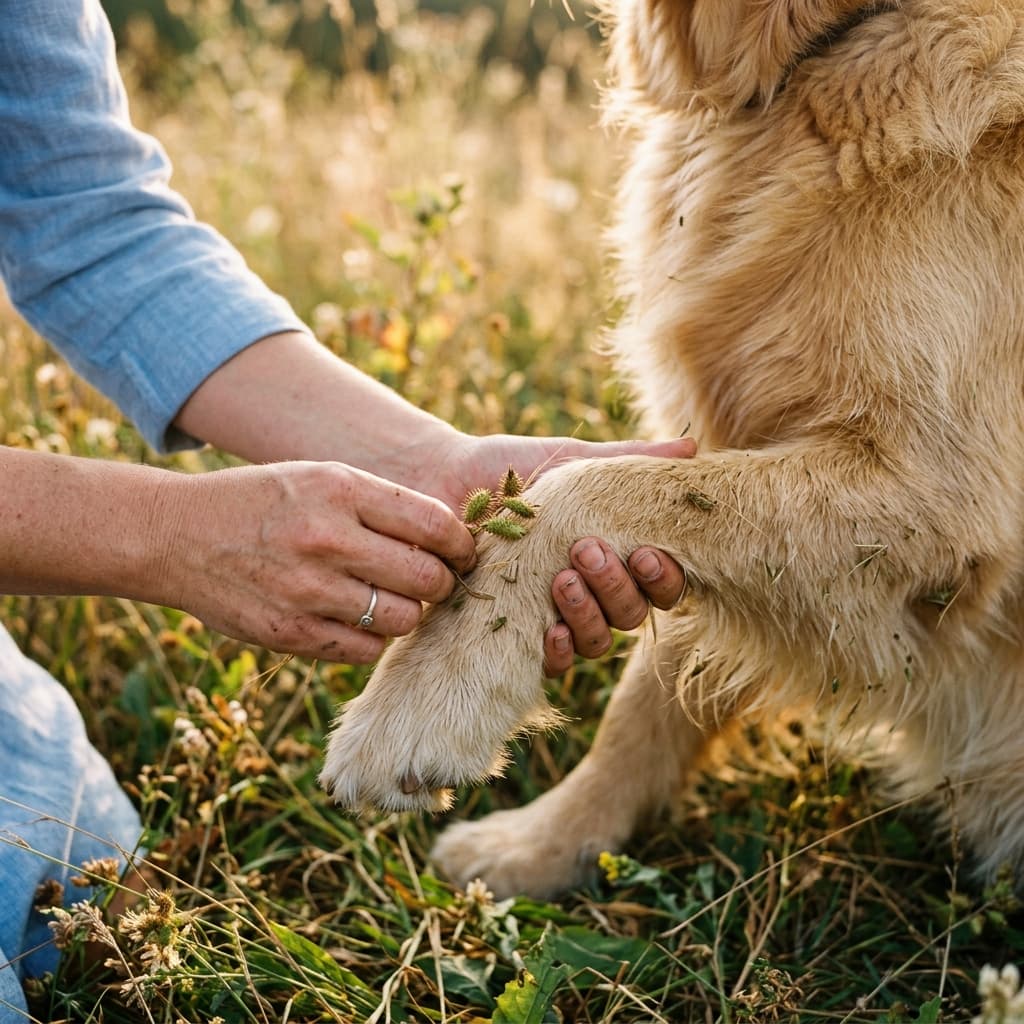
Understanding Post-Rain Grass Burrs, Foxtails & Beggar-Ticks
As September sunshine begins drying out overgrown monsoon grasslands, innocent-looking weed pods transform into barbed, arrow-shaped biological weapons designed to burrow into flesh.
Barbed plant awns from wild grasses (foxtails, spear grass, beggar-ticks, and sandburs) possess microscopic backward-facing barbs. Once they catch on your dog's coat, normal muscle movement pushes them deeper into paw webbing, ear canals, eyes, and groin skin. If unaddressed, they can migrate internally and cause severe deep abscesses.
Key Factors when Evaluating Post-Rain Grass Burrs, Foxtails & Beggar-Ticks
Many dog parents think burrs are merely a cosmetic grooming annoyance that can wait until the weekend brush-out. With gentle plant seeds, that may be true. But with sharp grass awns like foxtails and spear grass, waiting 48 hours can result in an emergency veterinary surgery under general anesthesia.
Once a sharp awn punctures the skin between the toe pads, it travels through subcutaneous fascial planes, carrying environmental bacteria deep into leg muscle tissue. Performing a thorough physical check the second you return from a grassy park walk is the single most effective way to catch awns while they are still resting on the coat surface.
- Barbed migration mechanics: Microscopic one-way barbs prevent the seed awn from backing out, driving it deeper into subcutaneous tissue with every step.
- Critical vulnerability zones: Interdigital webbing between paw pads, inner ear canals, eye conjunctiva, armpits, groin, and underside of the tail.
- Clinical emergency signs: Violent head shaking, paw licking with sudden limping, squinting with green eye discharge, or localized weeping swelling with a small puncture hole.
- Painless extraction methods: Using virgin coconut oil to lubricate hair shafts before sliding metal combs through tangles rather than tearing with slickers.
Top Picks for Post-Rain Grass Burrs, Foxtails & Beggar-Ticks
Chris Christensen 7.5-Inch Fine/Coarse Greyhound Metal Comb
₹₹₹Best for: The gold-standard professional metal comb for sliding burrs out of feathered fur
Precision-ground solid brass spine with smooth nickel-chrome rounded teeth that glide effortlessly through long hair feathers without snagging or pulling skin.
Pros
- Rounded tooth tips protect sensitive skin
- Solid durable brass spine
- Glides through tangles easily
Tradeoffs
- Premium price point
TickEase Dual-Tipped Fine Precision Extraction Tweezers
₹Best for: Extracting tiny embedded plant awns and ticks with surgical precision
Medical-grade stainless steel tweezer featuring ultra-fine micro-slender tips on one end and a slotted tick remover on the other, ideal for interdigital inspection.
Pros
- Surgical micro-precision tips
- Autoclavable stainless steel
- Very budget friendly
Tradeoffs
- Requires good lighting and steady hands
Who Will Benefit Most
Keep a sturdy dual-density metal greyhound comb and a pair of precision fine-tip tweezers right beside your leash hook at the front door.
Conduct your inspection methodically from nose to tail: muzzle, eyes, ear flaps, front armpits, between all sixteen toe pads, groin, and under the tail.
When to Consider Alternatives
Never yank a cluster of burrs out with brute force or sharp-bristled wire slicker brushes; tearing fur causes pain and makes dogs dread future grooming.
Do not use sharp kitchen scissors to snip out burrs close to the skin; dogs frequently twitch, leading to horrific accidental skin cuts.
Important Considerations Before Buying
- If your dog violently shakes their head, tilts their ear to one side, or whines after a grassy walk, do not poke tweezers down the ear canal; seek immediate veterinary otoscopic evaluation.
- Trim the feathering fur between your dog's paw pads flush with the pads during September to minimize seed adhesion.
- Avoid walking off-leash through overgrown empty plots, railway verges, and unmaintained municipal park corners where weed grasses go to seed.
- Warm a spoonful of coconut oil on your hands and massage it into burr clusters before combing for zero-pain sliding removal.
Practical Tips for Daily Use
- Have your dog lie on their side on the living room rug for a relaxing belly rub while you gently spread each toe pad under a bright phone flashlight.
- Slide the wide-toothed side of your metal comb through leg feathers to catch hidden seeds before they work their way down to the skin.
- Check inside the lip folds and under the collar band where loose seeds often accumulate unnoticed.
- Keep your dog on paved walking paths or closely mown lawns during peak seed-shedding weeks in September.
Final Recommendations on Post-Rain Grass Burrs, Foxtails & Beggar-Ticks
Taking three minutes after every park walk to inspect Shiro's paws and feathers has saved us from multiple vet visits.
With a little coconut oil and a metal greyhound comb, even the stickiest beggar-ticks slide right out without pulling a single hair.
Share this guide
Found this useful? Share it with other dog parents.
Share this guide: