Best Dog Car Seat Covers and Backseat Protectors
Some links on this site may be affiliate links. As an Amazon Associate, we may earn from qualifying purchases at no extra cost to you.
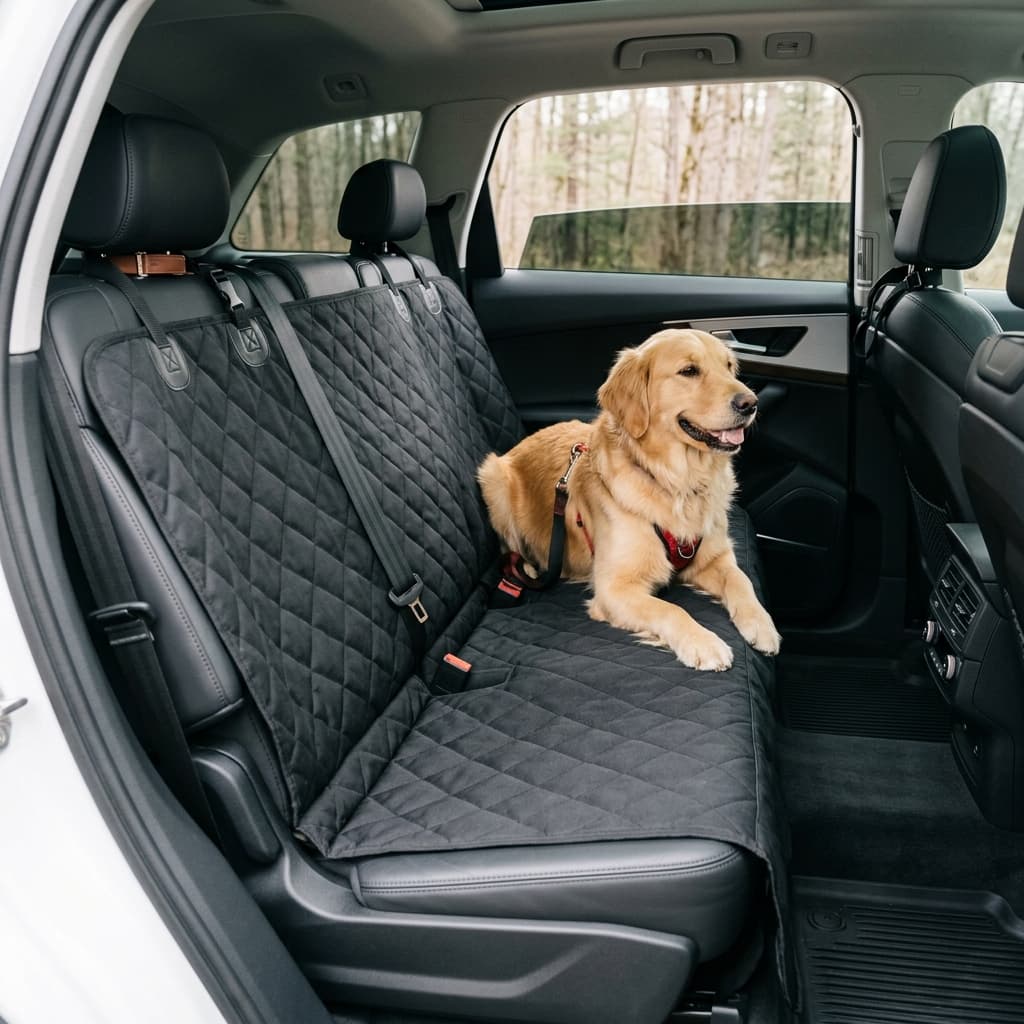
Understanding Best Dog Car Seat Covers and Backseat Protectors
A single muddy car ride without a seat cover can leave fur and staining in car upholstery that takes far more effort to clean than the trip was worth. A good backseat cover costs less than one professional detailing session.
Most owners discover they need a car seat cover after their car interior is already coated in fur, muddy paw prints, and the faint smell of wet dog, at which point the cleanup cost exceeds the cost of the cover several times over.
Key Factors when Evaluating Best Dog Car Seat Covers and Backseat Protectors
The most protective and popular design is the hammock cover, which attaches to both front and rear headrests and creates a continuous covered surface from the back of the front seats to the rear seatback. This prevents the dog from slipping into the footwell and protects every fabric surface in the rear.
For cars where passengers also sit in the back or where the dog is small and tends to stay in one spot, a simple bench cover without the hammock front is easier to install and remove. The tradeoff is that the footwell and lower door panels remain unprotected on busy travel days.
- Hammock-style covers protect the entire back area including the gap between seats.
- Non-hammock bench covers suit cars where the front seat is also used and the dog shares the rear.
- Side flaps prevent the dog from stepping off the cover onto unprotected door panels.
- Seat anchors and headrest clips determine whether the cover shifts and bunches during the ride.
Top Picks for Best Dog Car Seat Covers and Backseat Protectors
Full Hammock Seat Cover with Side Flaps
$$Best for: Dogs that move around or cars with full rear use during trips
A full-coverage hammock cover with adjustable headrest clips, seat anchors, and fold-down side flaps that cover door panels as well as the main seat surface.
Pros
- Maximum protection
- Prevents footwell tumbles
- Side flap protection is rare at this price
Tradeoffs
- Takes longer to install and remove
- Side flaps can block door controls on some car models
Waterproof Quilted Bench Cover
$Best for: Short trips, smaller dogs, or vehicles shared by passengers and dogs
A flat waterproof bench cover with non-slip backing that sits on the rear bench and is quick to put on and remove without modifying the front headrests.
Pros
- Very fast installation
- Compact to store
- Machine washable
Tradeoffs
- No footwell protection
- Can slide without anchor straps on smooth upholstery
Heavy-Duty Cargo and Seat Combination Cover
$$$Best for: SUVs and hatchbacks where the dog travels in the boot area
A two-piece set covering both the folded rear seat and the boot/cargo floor, suitable for dogs that travel in the rear section rather than on the passenger seats.
Pros
- Covers a larger total area
- Fits SUV load areas well
- Reduces fur from boot to cabin transfer
Tradeoffs
- More expensive
- Sizing needs to match the specific vehicle boot dimensions
Who Will Benefit Most
A car seat cover is a practical purchase for any dog owner who makes regular car journeys, whether daily commutes to the park or longer road trips. The time saved on post-trip cleanup, fur removal, wipe-downs, airing out, pays back the cost within weeks of regular use.
It’s particularly worth buying before introducing a puppy to the car. Establishing the covered setup from the first trip makes it the permanent norm rather than a retrofit after damage is already done.
When to Consider Alternatives
Skip hammock covers if your dog has very strong motion anxiety and needs to be able to see out clearly from a lower position. Hammock covers create an improved surface that may increase disorientation in anxious travellers.
You can skip heavy-duty versions for infrequent travellers. A simple waterproof bench cover used every few months may be sufficient if road trips are rare and the dog isn’t a heavy shedder.
Important Considerations Before Buying
- Measure the rear seat width and depth before ordering, many covers claim universal fit but may bunch or leave gaps on unusual seat widths.
- Check whether the cover allows access to rear seat belt buckles, which may be needed for dog harness restraints.
- Test the cover's non-slip features on a short trip before a long one to verify it doesn’t shift.
- Wash the cover promptly after a muddy trip to prevent staining from setting into the fabric.
Practical Tips for Daily Use
- Install the cover before loading the dog rather than trying to fit it with the dog already in the car.
- Carry a lint roller in the glovebox for quick spot removal from the front seat during longer journeys.
- Shake the cover out before putting it in the washing machine to avoid clogging the machine with fur.
- Keep a second cover if the dog travels daily, one in use, one washed and drying.
Final Recommendations on Best Dog Car Seat Covers and Backseat Protectors
A good car seat cover is a straightforward protective investment that keeps car resale value higher, makes post-trip cleanup fast, and removes the stress of choosing between a clean car and bringing the dog on every trip.
The best option is the one that fits the specific car, covers the surfaces the dog actually uses, and can be washed in a standard machine without drama after every muddy adventure.
Share this guide
Found this useful? Share it with other dog parents.
Share this guide: