Best Interactive Dog Toys for Mental Stimulation
Some links on this site may be affiliate links. As an Amazon Associate, we may earn from qualifying purchases at no extra cost to you.
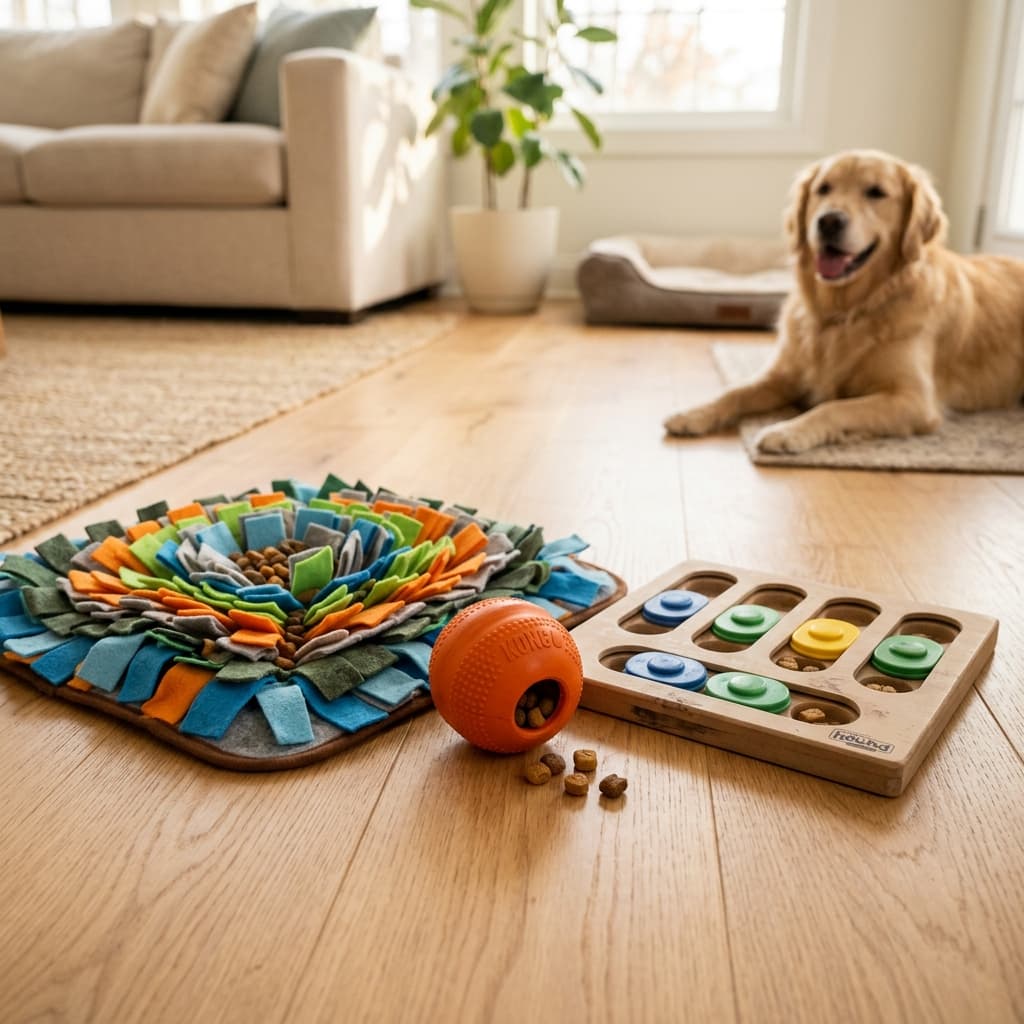
Understanding Best Interactive Dog Toys for Mental Stimulation
A physically tired dog is easy to manage, but a mentally understimulated dog is a different problem entirely, one that chewing, barking, and restless pacing can signal well before any physical outlet has been tried.
Most standard toys offer play without problem-solving, which means highly intelligent or high-energy dogs exhaust them quickly and then go looking for their own forms of engagement.
Key Factors when Evaluating Best Interactive Dog Toys for Mental Stimulation
Mental stimulation toys work differently from physical toys. A ball gives kinetic feedback. A puzzle feeder demands focus, trial and error, and some degree of patience. For dogs with naturally strong problem-solving instincts, terriers, herding breeds, retrievers, that shift in challenge type can be as tiring as a longer walk.
The tricky part is calibrating difficulty. A toy that is too easy gets solved in thirty seconds and ignored. A toy that is too hard causes frustration and disengagement. The most useful interactive toys are adjustable, or come in a range that allows progression as the dog's skills improve.
- Difficulty level should be adjusted as the dog gets faster at solving the toy.
- Treat-dispensing toys need regular cleaning to stay hygienic and functional.
- Interactive toys work best when time-limited, not left available all day.
- The best mental exercise toy is the one the dog is still interested in after a week.
Top Picks for Best Interactive Dog Toys for Mental Stimulation
Adjustable Puzzle Feeder
$$Best for: Mealtimes as a mental workout
A puzzle-style bowl or sliding tray that hides kibble behind movable covers, turning every meal into a structured problem-solving session.
Pros
- Slows eating and adds challenge
- Reusable daily
- Adjustable difficulty on better models
Tradeoffs
- Requires cleaning after every meal
- Too easy for fast learners after initial sessions
Treat-Dispensing Ball
$Best for: Active dogs who prefer moving play
A hollow rubber ball that releases treats as the dog rolls it, combining physical movement with reward-based problem solving.
Pros
- Encourages movement
- Works on hard floor and rugs
- Easy to reload
Tradeoffs
- Loud on hard floors
- Not suitable for very small spaces
Multi-Level Puzzle Board
$$$Best for: Dogs with strong scent or problem-solving instincts
A structured puzzle board with several different mechanisms that require the dog to slide, lift, and spin components to uncover hidden treats.
Pros
- High engagement for smart breeds
- Multiple difficulty layers
- Durable plastic construction
Tradeoffs
- More expensive than simpler options
- Needs supervision to prevent chewing the board
Who Will Benefit Most
Interactive toys are especially useful for dogs recovering from injury, living in smaller spaces, or spending long periods indoors without physical outlets. They are also a smart investment for households with breeds that were bred for jobs, herding, scenting, retrieving, because those dogs need mental work as much as physical exercise.
They also work well as part of a mealtime routine. Feeding through a puzzle or dispenser instead of a standard bowl adds daily mental engagement without requiring extra time from the owner.
When to Consider Alternatives
Skip complex multi-step puzzles if your dog is young, easily frustrated, or still building basic training habits. Starting with simpler food dispensers and graduating to harder challenges gives a better foundation.
You should also set realistic expectations: interactive toys reduce restless behavior, they don’t replace walks, social time, or consistent training. They work best as a complement to a broader enrichment routine.
Important Considerations Before Buying
- Start with easier difficulty and increase challenge only after the dog solves it reliably and calmly.
- Limit interactive toy sessions to fifteen to thirty minutes to maintain novelty.
- Choose food-safe, non-toxic materials since many dogs will mouth the entire toy.
- Supervise new toy introductions, especially with puzzle boards that have small components.
Practical Tips for Daily Use
- Use the puzzle feeder at mealtime so mental engagement is built into the daily schedule.
- Rotate between two or three different interactive toys to avoid over-familiarity.
- Reduce treat portions on days when the dog is using food-dispensing toys to avoid overfeeding.
- Introduce new puzzles after a short exercise session when the dog is calm but not exhausted.
Final Recommendations on Best Interactive Dog Toys for Mental Stimulation
The best interactive dog toys for mental stimulation are the ones matched to both the dog's problem-solving appetite and the owner's willingness to supervise and maintain them. Challenge level matters more than novelty features.
A single adjustable puzzle feeder used consistently at mealtime will deliver more long-term value than a drawer full of one-use toys. Practical daily engagement is the goal, not an impressive toy collection.
Share this guide
Found this useful? Share it with other dog parents.
Share this guide: