Best Slow Feeders for Large Dogs
Some links on this site may be affiliate links. As an Amazon Associate, we may earn from qualifying purchases at no extra cost to you.
Understanding Best Slow Feeders for Large Dogs
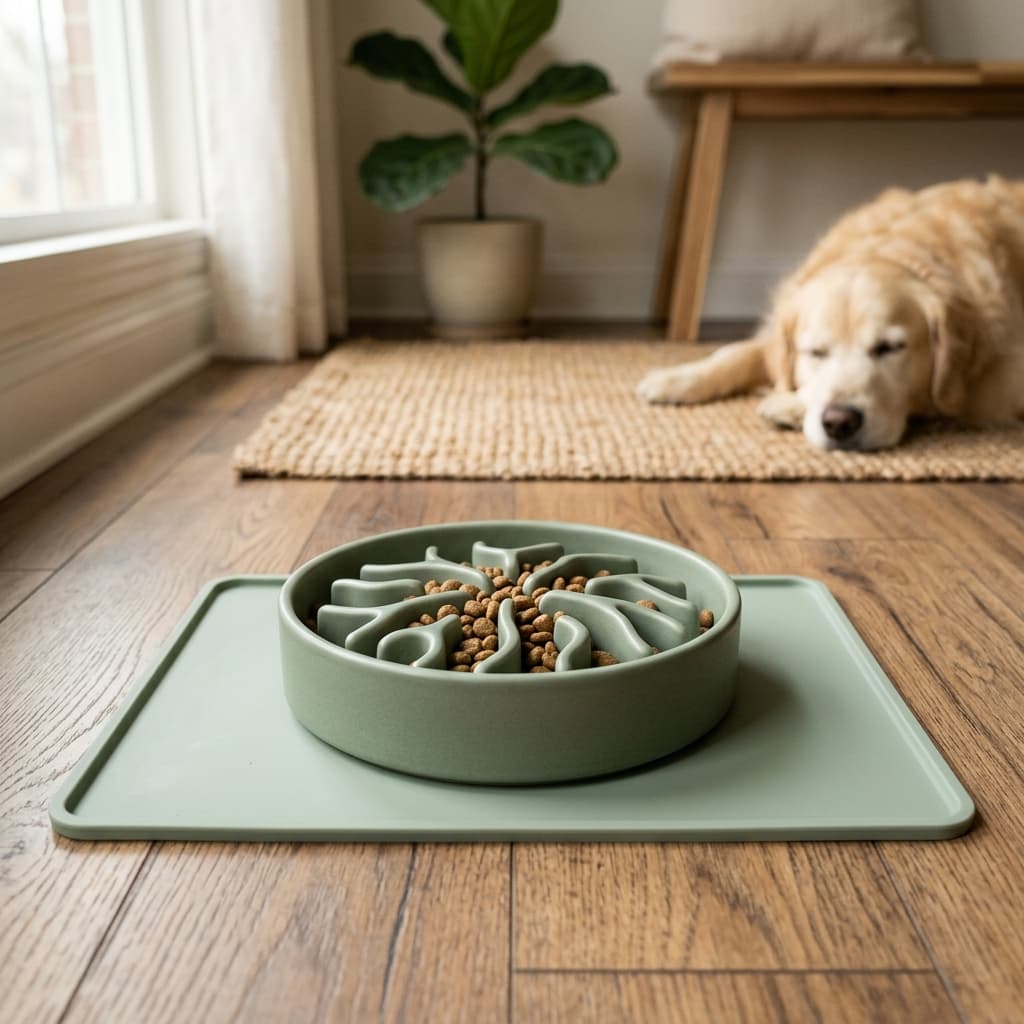
When a large dog like Shiro inhales dinner in seconds, the issue isn’t just speed. It’s the mess, the gasping, and that worry in the pit of your stomach about bloat. In our house, mealtime used to be over before we even sat down, leaving a trail of kibble and a very hiccupy dog.
Most slow feeders are designed for smaller pets. For a Golden Retriever with a wide muzzle and serious vacuuming skills, a basic maze bowl can either be too easy to 'solve' or so small that they just end up pushing it across the kitchen floor in frustration.
Key Factors when Evaluating Best Slow Feeders for Large Dogs
The best slow feeder for a large dog is usually one that balances challenge and convenience. If the maze is too simple, the dog still gulps food. If it’s too complex, the dog gets frustrated and the owner is stuck scrubbing corners after every meal.
Capacity also matters more than product photos suggest. A feeder that looks large online can still be awkward for wide muzzles or for dogs eating a full meal portion twice a day.
- Large dogs need wider spacing and deeper capacity than many small-pet slow feeders provide.
- A non-slip base matters because heavier dogs can push light bowls across the floor.
- Maze patterns should slow the dog down without being so narrow that food gets trapped constantly.
- Dishwasher-safe materials are worth prioritizing if the bowl is used daily.
Top Picks for Best Slow Feeders for Large Dogs
Outward Hound Fun Feeder Slo-Bowl
₹₹Best for: Big dogs that push bowls while eating
The genuine Outward Hound slow feeder, available in India. Perfect for slowing down fast eaters and improving digestion.
Pros
- Slowing feeding rate
- Dishwasher safe
- Vibrant design
Tradeoffs
- Hard for flat-faced breeds
Super Dog Stainless Steel Slow Feeder
₹₹Best for: Durable, hygienic, and chew-proof slow feeding
A premium stainless steel bowl with built-in obstructions. Perfect for those who prefer metal over plastic for hygiene.
Pros
- Hygienic
- Indestructible
- Non-skid board
Tradeoffs
- Loud for some dogs
Pedigree/Generic Improved Feeding Station
₹₹Best for: Households that want extra weight and a premium look
A practical improved stand that improves posture for large dogs while preventing bowl sliding.
Pros
- Better posture
- Stable
- Easy to clean
Tradeoffs
- Requires more space
Who Will Benefit Most
A slow feeder is worth considering if your large dog finishes meals almost immediately, leaves a sloppy feeding zone, or seems more settled when meals take longer. The right bowl can help pace eating while making mealtime feel less chaotic.
It’s also a good fit for homes that want a cleaner, more intentional feeding station. Stable feeders reduce skidding, food scatter, and the need to straighten bowls after every meal.
When to Consider Alternatives
Skip complex maze bowls if your dog already eats at a steady pace or becomes frustrated by puzzle-style feeding. Not every fast-looking eater needs a more difficult bowl.
You should also avoid very lightweight feeders if you already know your dog shoves dishes with enthusiasm. In that case, bowl stability matters more than maze creativity.
Important Considerations Before Buying
- Check the true bowl capacity against your dog’s actual meal size.
- Look for grip underneath or enough bowl weight to stay put.
- Choose a pattern that is easy to rinse after wet food or food toppers.
- Make sure the height still works comfortably with your dog’s feeding station.
Practical Tips for Daily Use
- Introduce the bowl gradually if your dog is used to very fast meals.
- Start with dry food only before testing it with wet food or toppers.
- Place the feeder on a mat so crumbs and splashes stay contained.
- Review portion size carefully, since slow feeders can make bowls look fuller than they are.
Final Recommendations on Best Slow Feeders for Large Dogs
For large dogs, slow feeding works best when the bowl is practical enough for daily use and sturdy enough to stay put. Stability, capacity, and cleanup usually matter more than novelty patterns.
Recommendations here stay organized around dog size and feeding behavior rather than a simple best-of ranking. That framing is more useful for large-dog owners making a specific decision.
Share this guide
Found this useful? Share it with other dog parents.
Share this guide: