The Curd and Rice Diet: A Probiotic Guide for Indian Dog Parents
Some links on this site may be affiliate links. As an Amazon Associate, we may earn from qualifying purchases at no extra cost to you.
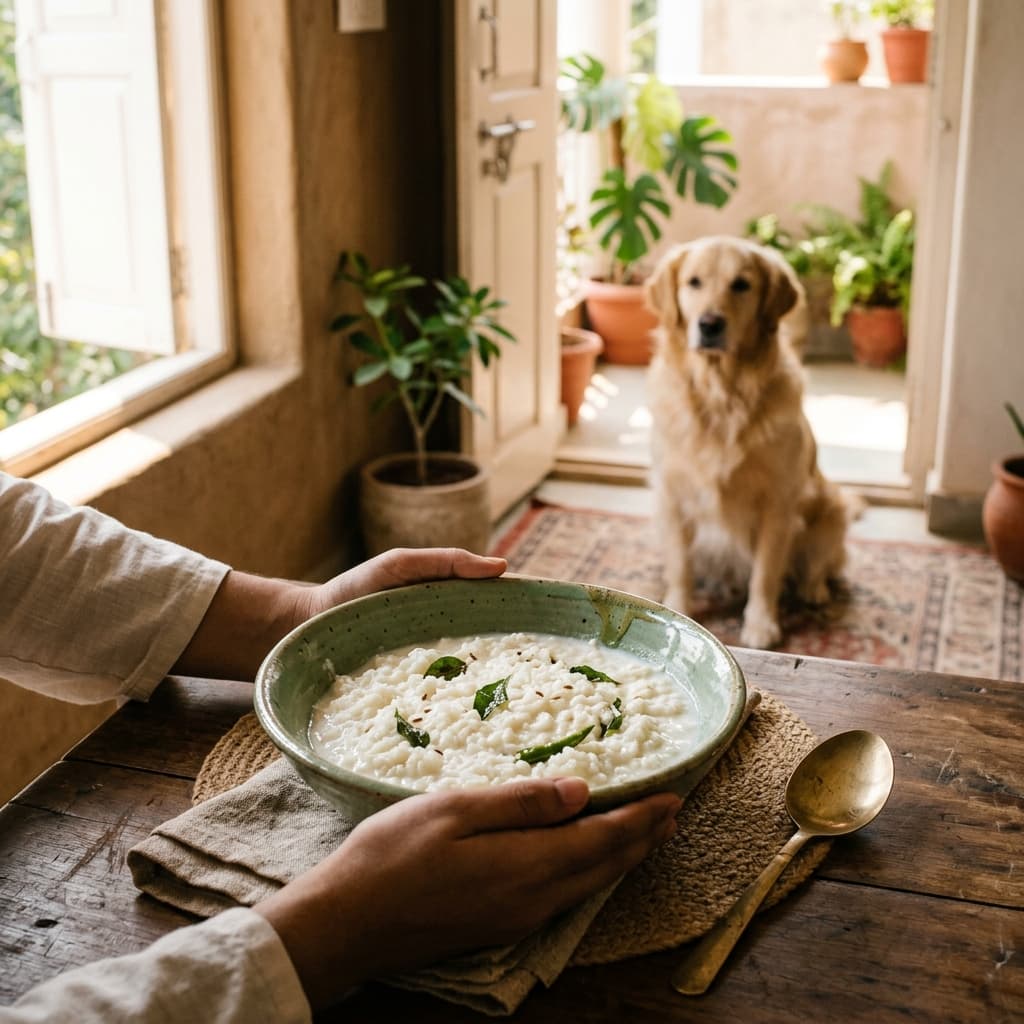
Understanding The Curd and Rice Diet
Whenever Shiro has a slightly 'off' tummy, our first move isn't a complex medication. It’s the traditional Indian staple: Curd and Rice. It’s our domestic secret for a happy gut.
Commercial probiotics can be expensive and sometimes contain fillers. Many Indian pet parents have the perfect natural probiotic in their kitchen but aren't sure of the 'safe' way to use it for their dogs.
Key Factors when Evaluating The Curd and Rice Diet
We found that Shiro responds much better to fresh, home-set curd than the store-bought 'probiotic' powders. The texture is familiar, and he loves the cooling effect during the hot summer months. We use it not just for upset tummies, but as a weekly 'refresh' for his digestive system.
The key is the preparation. We over-cook the rice until it's very soft (mushy) to make sure it moves easily through his system. We never add salt, sugar, or spices. It’s a simple, biological reset that has worked for generations of dogs in India.
- Plain, unsweetened curd is a low-lactose, high-calcium food for dogs.
- Over-cooked white rice is highly digestible and provides immediate energy.
- The live cultures in curd help restore gut flora after antibiotics or minor upsets.
- Always make sure the curd is fresh and not sour; sour curd can cause more gas.
Top Picks for The Curd and Rice Diet
Home-Set Curd (Dahi) from Whole Milk
₹Best for: The most natural and cost-effective probiotic source
Setting your own curd make sures there are no hidden thickeners or preservatives. It’s the highest quality Lactobacilli source you can give your dog.
Pros
- 100% natural
- Live active cultures
- Very inexpensive
Tradeoffs
- Requires 6-8 hours to set
Epigamia Greek Yogurt (Plain/Unsweetened)
₹₹Best for: A higher protein, lower lactose alternative for sensitive dogs
Greek yogurt has more of the whey removed, reducing the lactose content significantly. Excellent for dogs who might have a slight sensitivity to regular curd.
Pros
- High protein
- Very low lactose
- Thick and satisfying
Tradeoffs
- Pricier than home-made curd
Lactobacillus Acidophilus Probiotic Supplement for Dogs
₹₹Best for: Travel or when fresh curd isn't available
Concentrated capsules or powders that provide billions of CFUs. Useful for recovery after surgery or when your dog is on a strict grain-free diet.
Pros
- Consistent dosage
- Shelf-stable
- Easy to travel with
Tradeoffs
- Doesn't have the 'cooling' benefit of fresh dahi
Who Will Benefit Most
Include curd in your dog's diet if they have frequent gas, soft stools, or if they've recently been on a course of antibiotics. It’s a natural gut-healer.
A great cooling treat for all Indian dogs during the peak summer seasons of April, May, and June.
When to Consider Alternatives
Skip the fruit-flavored or sweetened yogurts. Xylitol (often used in 'lite' yogurts) is deadly to dogs, and sugar leads to obesity and inflammation.
Don't give large amounts of curd if your dog is known to be severely lactose intolerant (bloating/diarrhea immediately after dairy).
Important Considerations Before Buying
- Check the 'freshness': never use curd that smells unpleasantly sharp or sour.
- Avoid curd with any added spices like black salt or cumin for dogs.
- Start with a single tablespoon to test their tolerance.
- Make sure the rice is white rice (Basmati or Sona Masoori is fine) as brown rice can be too hard to digest during an upset tummy.
Practical Tips for Daily Use
- Mix one part curd with three parts over-cooked white rice.
- Serve at room temperature, never straight from the fridge if their tummy is already upset.
- Give small, frequent meals rather than one large one if they are recovering from diarrhea.
- Use curd as a healthy base for 'Pupsicles' in the summer.
Final Recommendations on The Curd and Rice Diet
Modern science is often just catching up to what Indian dog parents have known for years. A happy gut starts with the simplest ingredients.
Shiro’s 'tummy-reset' day is his favorite day of the week. Simplicity really is the ultimate sophistication.
Share this guide
Found this useful? Share it with other dog parents.
Share this guide: