Durable Crate Mats: Finding the Balance Between Comfort and Chewing
Some links on this site may be affiliate links. As an Amazon Associate, we may earn from qualifying purchases at no extra cost to you.
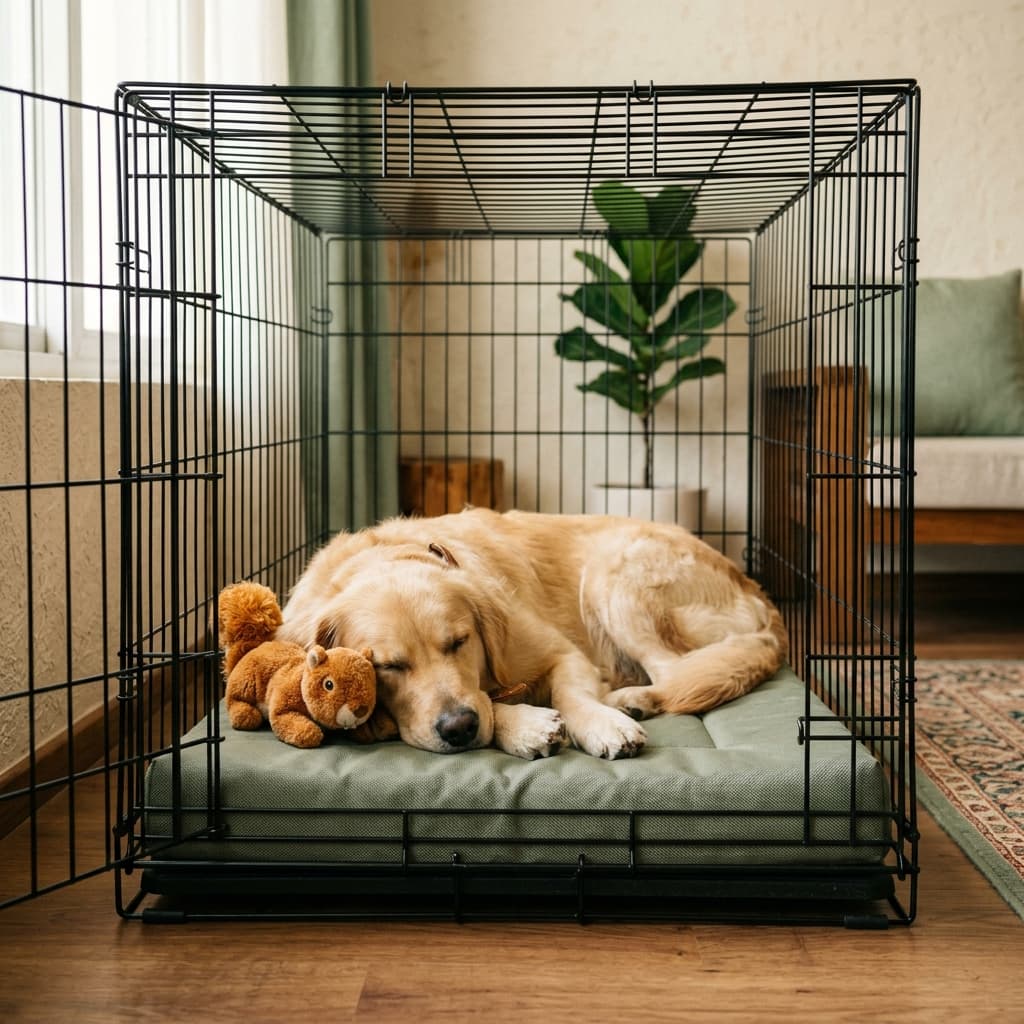
When Shiro was younger, he went through three crate mats in one month. He’d get bored, find a corner, and the next thing I knew, the living room looked like a snowstorm of polyester filling.
Most crate mats are either too thin (offering no support) or too fragile (easily shredded). For a dog who spends time in a crate, they need something that protects their elbows and hips from the hard plastic tray.
The Perspective
We tested a 'chew-proof' mat made of ballistic nylon against a standard plush one. The standard one lasted two days. The ballistic nylon one has been in Shiro’s crate for a year. It’s not as 'soft' to the human hand, but Shiro seems perfectly happy with the support it provides, and he has completely stopped trying to chew it.
The key we found is the fit. If the mat is slightly too small for the crate, the dog can get their jaw under the edge and start a tear. A tight, corner-to-corner fit is the secret to making a mat last. In the Indian heat, we also look for covers that don't trap too much moisture.
What actually worked for Shiro
K9 Ballistics Tough Dog Crate Pad
₹₹₹Best for: Aggressive chewers and dogs with crate anxiety
Made with their proprietary Ripstop fabric, this pad is designed to resist digging, scratching, and chewing. It’s virtually a tank in the world of crate mats.
Pros
- Nearly chew-proof
- Waterproof
- Easy to wipe clean
Tradeoffs
- Very firm
- Expensive
MidWest Homes for Pets Deluxe Microfiber Bed
₹₹Best for: General comfort for dogs who aren't destructive
A softer, plush option that fits most standard crate sizes perfectly. It’s excellent for dogs who just want a cozy spot to curl up and sleep.
Pros
- Very soft
- Fits standard crates
- Good value
Tradeoffs
- Easily destroyed by chewers
Orthopedic Memory Foam Crate Pad (Removable Cover)
₹₹Best for: Seniors needing extra joint support during crate time
Uses a solid slab of memory foam that doesn't 'bottom out.' The removable cover makes it easy to keep the crate smelling fresh.
Pros
- Great for joints
- High comfort
- Washable cover
Tradeoffs
- Foam can trap a bit of heat
Why this guide matters
When Shiro was younger, he went through three crate mats in one month. He’d get bored, find a corner, and the next thing I knew, the living room looked like a snowstorm of polyester filling. Most crate mats are either too thin (offering no support) or too fragile (easily shredded). For a dog who spends time in a crate, they need something that protects their elbows and hips from the hard plastic tray. The goal isn’t to find the flashiest item on a product page. It’s to choose gear that makes daily dog care easier, cleaner, and more consistent for the household using it.
That usually means balancing durability, ease of cleanup, comfort for the dog, and how realistic the product feels inside a real routine. In this guide, the focus stays on selecting high-denier fabrics and solid-foam cores that don't have tempting 'fluffy' corners, because those details tend to matter more than novelty features once the product is part of everyday life.
It’s also worth thinking about replacement fatigue. Many pet owners spend more over a year by rebuying low-fit products than they would by choosing one durable option from the start. A practical recommendation should help readers avoid that cycle by making the fit criteria clear before they spend money.
This guide focuses on practical use rather than hype-first rankings. Each section covers use case, tradeoffs, and what to expect from a product once it becomes part of a real daily routine, not just the first day of ownership.
What to compare before buying
We tested a 'chew-proof' mat made of ballistic nylon against a standard plush one. The standard one lasted two days. The ballistic nylon one has been in Shiro’s crate for a year. It’s not as 'soft' to the human hand, but Shiro seems perfectly happy with the support it provides, and he has completely stopped trying to chew it.
The key we found is the fit. If the mat is slightly too small for the crate, the dog can get their jaw under the edge and start a tear. A tight, corner-to-corner fit is the secret to making a mat last. In the Indian heat, we also look for covers that don't trap too much moisture.
When evaluating options, focus on long-term friction points: setup time, cleaning effort, storage footprint, and how quickly the product can be reset after use. Those details often decide whether a good product stays in daily rotation or gets pushed into a closet after the first week.
- Ballistic nylon or 1680D polyester covers are much harder to puncture.
- Concealed zippers prevent dogs from finding the weak point in the mat.
- Solid memory foam or egg-crate foam provides better orthopedic support than loose filling.
- Machine-washable covers are essential for maintaining crate hygiene.
Standout options worth shortlisting
A good shortlist should include a few different fits instead of one “perfect” answer. Some dogs need more structure, some homes need easier cleanup, and some buyers simply need something sturdy enough to last through daily use without turning into another replacement purchase in a month.
Each pick below is chosen for a different fit. Some households need the most durable option. Others need the easiest cleanup. And some buyers just need a reliable choice that holds up through daily use without becoming a replacement purchase in six weeks.
As you compare picks, imagine the first thirty days of use rather than the unboxing moment. Ask whether the product will still feel helpful after repeated washing, weekly resets, and normal household wear. The best shortlist is the one that still makes sense after novelty fades.
K9 Ballistics Tough Dog Crate Pad
₹₹₹Best for: Aggressive chewers and dogs with crate anxiety
Made with their proprietary Ripstop fabric, this pad is designed to resist digging, scratching, and chewing. It’s virtually a tank in the world of crate mats.
Pros
- Nearly chew-proof
- Waterproof
- Easy to wipe clean
Tradeoffs
- Very firm
- Expensive
MidWest Homes for Pets Deluxe Microfiber Bed
₹₹Best for: General comfort for dogs who aren't destructive
A softer, plush option that fits most standard crate sizes perfectly. It’s excellent for dogs who just want a cozy spot to curl up and sleep.
Pros
- Very soft
- Fits standard crates
- Good value
Tradeoffs
- Easily destroyed by chewers
Orthopedic Memory Foam Crate Pad (Removable Cover)
₹₹Best for: Seniors needing extra joint support during crate time
Uses a solid slab of memory foam that doesn't 'bottom out.' The removable cover makes it easy to keep the crate smelling fresh.
Pros
- Great for joints
- High comfort
- Washable cover
Tradeoffs
- Foam can trap a bit of heat
Who should buy this type of product
Buy a ballistic nylon mat if your dog has a history of destroying beds. The initial investment pays for itself within two months of not buying replacements.
Best for puppies who are still in the 'exploratory chewing' phase of house training.
Buyers usually get better results when they define success ahead of time. That can mean less floor mess after meals, quicker post-walk cleanup, calmer car trips, or fewer replacement purchases. A clear outcome helps narrow product choices quickly and prevents overbuying.
Who should skip or keep expectations modest
Skip the cheap 'fleece' pads for anything other than short-term travel. They provide zero skeletal support and can be shredded in seconds.
Avoid mats with loose polyester stuffing: they are messy, unsupportive, and a massive choking risk.
Skipping a product for now can be the smart choice, especially when routine habits are still changing. Many households benefit more from improving setup, storage, and consistency first, then adding targeted products once the daily pattern is stable.
Key considerations before you click buy
Most disappointing pet purchases aren’t terrible products. They are mismatched products. A setup that works for a short-coated apartment dog may be frustrating for a heavy shedder in a busy family home, and a travel accessory that feels compact online may still be annoying to store or clean in practice.
Before buying, compare the product against your dog’s size, coat, habits, supervision needs, and the amount of maintenance you are actually willing to do. The goal is to help avoid a mismatch, not push the most expensive option every time.
Budget planning is part of fit as well. A lower upfront price can still be expensive if the item wears quickly or creates ongoing refill costs. Looking at both purchase price and maintenance overhead gives a better view of true value for everyday use.
- Measure your crate internal dimensions twice before ordering.
- Check that the mat is non-slip so it doesn't slide when the dog enters.
- Look for 'taped seams' for added durability against digging.
- Make sure the cover is truly machine washable, not just 'hand wipe'.
Simple ways to get more value from it
Even a well-chosen product works better when the setup around it’s simple. Keep the item where you already do the task, pair it with one or two supporting essentials, and make sure everyone in the home understands the routine. That reduces friction and makes the product feel useful rather than aspirational.
For dog households, consistency usually beats intensity. Short brushing sessions, a repeatable travel kit, or a feeding setup that is easy to reset after meals will outperform complicated systems that look nice on day one and then get ignored.
If possible, run a short two-week trial mindset after buying. Note what feels easier, what still causes friction, and what part of the routine needs adjustment. Small tweaks in placement, storage, or timing often unlock more value than replacing the product immediately.
- If your dog is a dedicated chewer, spray the corners with a bitter apple spray initially.
- Wash the cover every two weeks to prevent 'crate odor' buildup.
- Rotate the mat every few months to even out the wear on the foam.
- Add a light blanket on top during winter for extra nesting comfort.
Final take
A crate should be a sanctuary, not a battleground. Finding a mat that survives his jaws has finally made the crate Shiro’s favorite nap spot.
Comfort shouldn't be fragile. Durability and support can live in the same product.
A practical buying decision is usually one that keeps working quietly in the background of daily life. When a product supports routine without creating extra hassle, it earns its place. That is the standard used for every recommendation here.
Share this guide
Found this useful? Share it with other dog parents.
Share this guide:


