Late-Monsoon Muggy Heat & Humidity: Preventing Silent Heat Exhaustion in Dogs
Some links on this site may be affiliate links. As an Amazon Associate, we may earn from qualifying purchases at no extra cost to you.
Understanding Late-Monsoon Muggy Heat & Humidity
When the thermometer reads 32 degrees Celsius, you might assume it is safe for an afternoon walk, but if the humidity is 88%, your dog's internal cooling system is operating near total failure.
Dogs do not possess full-body sweat glands; they regulate core temperature almost entirely through evaporative heat loss via panting. In saturated, humid air, panting cannot evaporate moisture from the tongue and respiratory tract. Body heat accumulates rapidly inside vital organs, leading to sudden heat exhaustion, brain edema, and cellular breakdown.
Key Factors when Evaluating Late-Monsoon Muggy Heat & Humidity
Heat exhaustion in humid weather is far more insidious than dry summer heat because dog owners let their guard down. In a dry 40-degree May heatwave, owners know instinctively to stay indoors. But during late August and September 'muggy sizzlers,' outdoor temperatures seem deceptively mild while the air is dense with suffocating moisture.
Because the dog cannot dump heat through panting, their heart rate skyrockets in a desperate attempt to pump blood to peripheral capillaries. If exercise continues, core body temperature spikes unchecked. Crucially, attempting to cool an overheated dog with ice water is dangerous because freezing water causes peripheral vasoconstriction, shunting scorching blood back into internal organs.
- Evaporative efficiency threshold: Above 80% ambient relative humidity, canine panting loses more than 65% of its natural cooling capacity.
- Early clinical markers: Excessive frantic panting, brick-red or pale sticky gums, dark ropey saliva, wide retracted tongue, and glazed or uncoordinated eyes.
- Critical core temperature danger: A dog's normal body temperature is 38.3 to 39.2 degrees Celsius; core temperatures exceeding 40.5 degrees Celsius constitute life-threatening heat stroke.
- High-risk anatomy: Double-coated northern breeds, brachycephalic dogs with shortened airways (Pugs, Bulldogs), seniors, and overweight canines.
Top Picks for Late-Monsoon Muggy Heat & Humidity
Coolaroo Heavy Duty Elevated Pet Bed with Breathable Fabric
₹₹Best for: Promoting passive full-body air circulation while resting indoors
Suspends your dog 8 inches above the floor, allowing cool fan breeze to circulate continuously under their chest and stomach where major cooling blood vessels lie.
Pros
- 360 degree continuous ventilation
- Resists mildew in humid rooms
- Relieves joint pressure
Tradeoffs
- Requires simple initial bolt assembly
All For Paws Always Cool Non-Toxic Gel Cooling Mat (Large)
₹₹Best for: Instant contact cooling after outdoor potty breaks without electricity
Self-cooling phase-change gel activates under your dog's weight, providing a surface temperature 5 to 7 degrees cooler than ambient room air.
Pros
- Pressure-activated with zero water or refrigeration needed
- Puncture-resistant outer nylon
- Folds flat for storage
Tradeoffs
- Recharges after 40 minutes of continuous use
Who Will Benefit Most
Combine the temperature in Fahrenheit and the relative humidity percentage; if the sum exceeds 150, cancel all vigorous outdoor fetch and exercise entirely.
Keep a dedicated digital room hygrometer/thermometer at floor level where your dog sleeps, rather than at eye level where air is warmer.
When to Consider Alternatives
Never throw ice cubes or submerge an overheated dog in freezing water; use lukewarm or cool tap water on their groin, armpits, and paw pads to allow steady convective cooling.
Do not walk on dark asphalt during afternoon hours; wet asphalt retains heat and radiates scorching thermal energy into low-slung dog bellies.
Important Considerations Before Buying
- Brachycephalic flat-faced breeds must be restricted to air-conditioned rooms when humidity exceeds 70%.
- Offer cool, fresh filtered water in small, frequent amounts rather than letting an overheated dog gulp a massive bowl all at once, which can trigger gastric torsion.
- Monitor older dogs with heart murmurs extra closely, as cardiovascular stress spikes dramatically in humid weather.
- If you notice vomiting, bloody diarrhea, or sudden staggering, wrap your dog in damp towels and drive immediately to an emergency veterinary clinic.
Practical Tips for Daily Use
- Move morning walks to early dawn (5:30 to 6:30 AM) when solar radiation is zero and ground temperatures are at their absolute daily minimum.
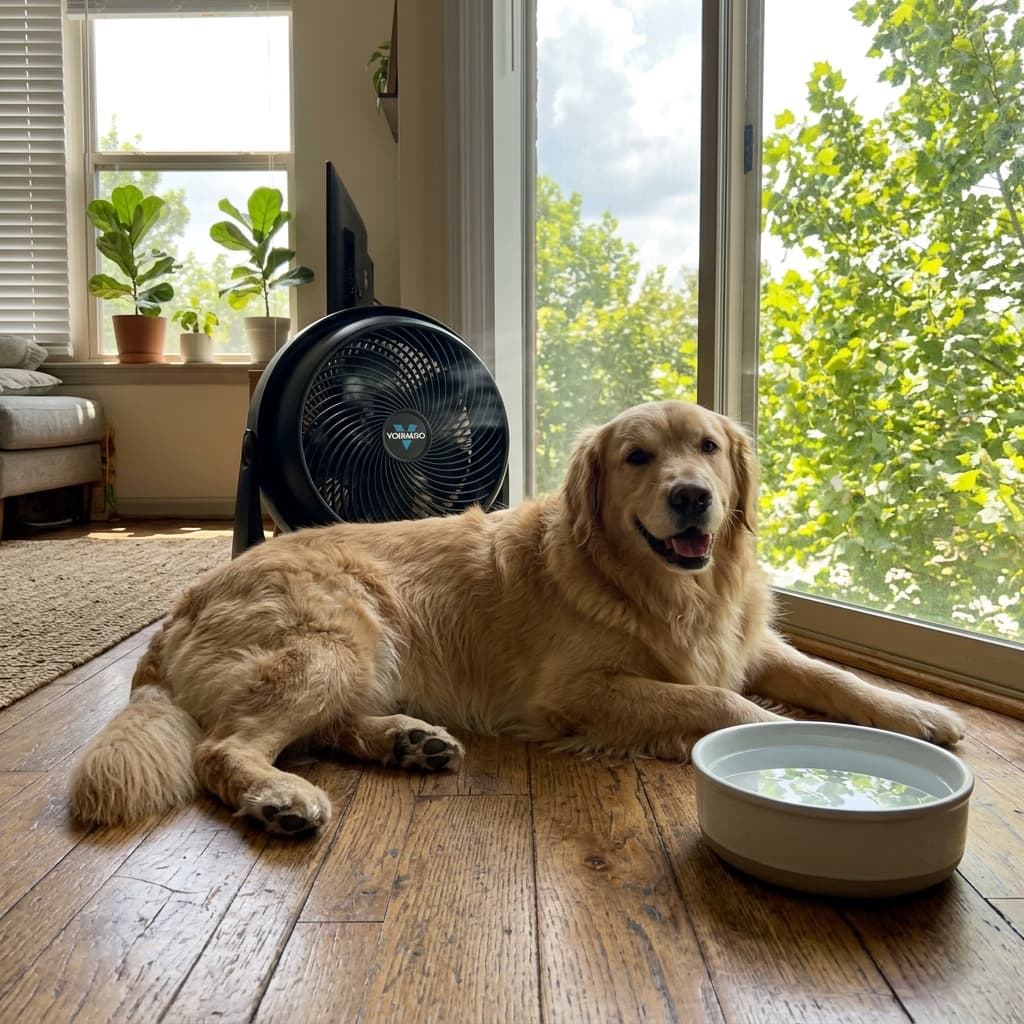
- Set an oscillating floor circulator fan directed at your dog's resting spot to create constant air movement over their fur.
- Carry a small squeeze bottle filled with cool water to dampen paw pads and groin during necessary outdoor potty excursions.
- Freeze chicken bone broth into ice cube trays to encourage gentle, voluntary hydration throughout the afternoon.
Final Recommendations on Late-Monsoon Muggy Heat & Humidity
Watching Shiro struggle after a brief midday walk in 88% humidity made us rethink our entire summer-to-autumn routine.
Adjusting our walk schedule to dawn and dusk and keeping our living room well-ventilated keeps him energetic, playful, and completely safe.
Share this guide
Found this useful? Share it with other dog parents.
Share this guide: