ShiroFinds
Health & Daily Care

Caring for a Senior Golden Retriever: A Practical Mobility & Comfort Guide

ShiroFindsPublished April 5, 202610 min readUpdated April 5, 2026

Some links on this site may be affiliate links. As an Amazon Associate, we may earn from qualifying purchases at no extra cost to you.
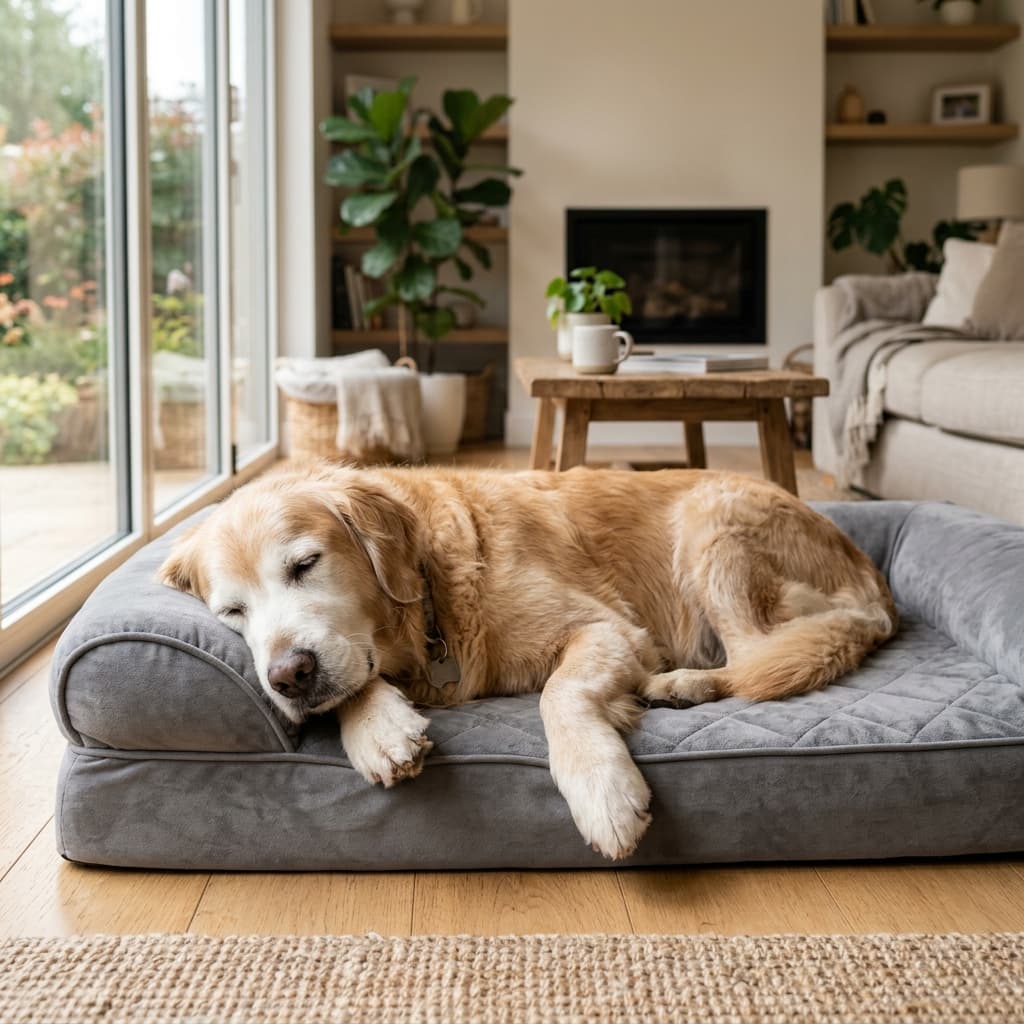
Caring for a Senior Golden Retriever: A Practical Mobility & Comfort Guide

There is a unique beauty in the graying muzzle of a senior Golden Retriever. As they slow down, our role as parents shifts from managing high-energy play to protecting their comfort and dignity. It’s a transition that requires patience, but it’s an honor to care for them in their golden years.

We often try to keep our senior dogs on a 'puppy schedule,' which can lead to joint pain, exhaustion, and frustration. Adapting your home isn't about giving up; it's about honoring the new, gentler version of your best friend.

Curated Selection

The Perspective

When a large breed dog starts hesitating before getting up, a floor-level bed is often no longer sufficient. Switching to high-density orthopedic foam doesn't just provide a soft place to sleep; it supports the weight of their joints, making it easier for them to stand up without pain.

Elevating food and water bowls is another small change with massive impact. Reducing that deep neck crane makes mealtimes significantly more comfortable. Most senior care is about these 'erasures': erasing the small physical hurdles that add up to a harder day for them.

Curated Selection

What actually worked for Shiro

Floof Orthopedic High-Density Bed

₹₹₹

Best for: Providing relief for aging joints and hips

High-density orthopedic foam handles a large dog's weight without bottoming out, providing the necessary joint relief for smoother morning wake-ups.

Pros

  • Medical-grade support
  • Removable washable cover
  • Durable foam

Tradeoffs

  • Higher price point
  • Requires floor space
View on Amazon

Adjustable Improved Feeder

₹₹

Best for: Reducing neck and shoulder strain during meals

Raising a large dog's bowl by just 8-12 inches makes mealtimes significantly more comfortable. It eliminates the awkward crouching that can strain an aging spine.

Pros

  • Adjustable height
  • Easy to clean
  • Stable design

Tradeoffs

  • Must match your dog's specific height
View on Amazon

Beaphar Joint Fit / Glucosamine Supplements

₹₹

Best for: Supporting mobility from the inside out

High-quality glucosamine and chondroitin supplements are the gold standard for maintaining joint fluid and cartilage as dogs age. Best used under vet supervision.

Pros

  • Specifically formulated for joints
  • Easy to administer
  • Widely available

Tradeoffs

  • Requires vet consultation first
View on Amazon
Curated Selection

Why this guide matters

There is a unique beauty in the graying muzzle of a senior Golden Retriever. As they slow down, our role as parents shifts from managing high-energy play to protecting their comfort and dignity. It’s a transition that requires patience, but it’s an honor to care for them in their golden years. We often try to keep our senior dogs on a 'puppy schedule,' which can lead to joint pain, exhaustion, and frustration. Adapting your home isn't about giving up; it's about honoring the new, gentler version of your best friend. The goal isn’t to find the flashiest item on a product page. It’s to choose gear that makes daily dog care easier, cleaner, and more consistent for the household using it.

That usually means balancing durability, ease of cleanup, comfort for the dog, and how realistic the product feels inside a real routine. In this guide, the focus stays on adjusting your home environment to prioritize low-impact comfort and cognitive ease, because those details tend to matter more than novelty features once the product is part of everyday life.

It’s also worth thinking about replacement fatigue. Many pet owners spend more over a year by rebuying low-fit products than they would by choosing one durable option from the start. A practical recommendation should help readers avoid that cycle by making the fit criteria clear before they spend money.

This guide focuses on practical use rather than hype-first rankings. Each section covers use case, tradeoffs, and what to expect from a product once it becomes part of a real daily routine, not just the first day of ownership.

What to compare before buying

When a large breed dog starts hesitating before getting up, a floor-level bed is often no longer sufficient. Switching to high-density orthopedic foam doesn't just provide a soft place to sleep; it supports the weight of their joints, making it easier for them to stand up without pain.

Elevating food and water bowls is another small change with massive impact. Reducing that deep neck crane makes mealtimes significantly more comfortable. Most senior care is about these 'erasures': erasing the small physical hurdles that add up to a harder day for them.

When evaluating options, focus on long-term friction points: setup time, cleaning effort, storage footprint, and how quickly the product can be reset after use. Those details often decide whether a good product stays in daily rotation or gets pushed into a closet after the first week.

  • Orthopedic support is a medical necessity, not a luxury, for aging joints.
  • Improved feeding reduces neck strain for dogs with arthritis.
  • Visibility and footing (rugs) matter more as their senses and balance shift.
  • Shorter, frequent 'sniffaris' are often better than long, grueling walks.

Standout options worth shortlisting

A good shortlist should include a few different fits instead of one “perfect” answer. Some dogs need more structure, some homes need easier cleanup, and some buyers simply need something sturdy enough to last through daily use without turning into another replacement purchase in a month.

Each pick below is chosen for a different fit. Some households need the most durable option. Others need the easiest cleanup. And some buyers just need a reliable choice that holds up through daily use without becoming a replacement purchase in six weeks.

As you compare picks, imagine the first thirty days of use rather than the unboxing moment. Ask whether the product will still feel helpful after repeated washing, weekly resets, and normal household wear. The best shortlist is the one that still makes sense after novelty fades.

Floof Orthopedic High-Density Bed

₹₹₹

Best for: Providing relief for aging joints and hips

High-density orthopedic foam handles a large dog's weight without bottoming out, providing the necessary joint relief for smoother morning wake-ups.

Pros

  • Medical-grade support
  • Removable washable cover
  • Durable foam

Tradeoffs

  • Higher price point
  • Requires floor space
View on Amazon

Adjustable Improved Feeder

₹₹

Best for: Reducing neck and shoulder strain during meals

Raising a large dog's bowl by just 8-12 inches makes mealtimes significantly more comfortable. It eliminates the awkward crouching that can strain an aging spine.

Pros

  • Adjustable height
  • Easy to clean
  • Stable design

Tradeoffs

  • Must match your dog's specific height
View on Amazon

Beaphar Joint Fit / Glucosamine Supplements

₹₹

Best for: Supporting mobility from the inside out

High-quality glucosamine and chondroitin supplements are the gold standard for maintaining joint fluid and cartilage as dogs age. Best used under vet supervision.

Pros

  • Specifically formulated for joints
  • Easy to administer
  • Widely available

Tradeoffs

  • Requires vet consultation first
View on Amazon

Who should buy this type of product

Start investing in senior care early if you notice your dog hesitating at stairs or taking longer to settle. You don't have to wait for a diagnosis to prioritize their comfort.

These items are essential for any household with a large breed dog over age 7 or 8. Large dogs feel the weight of age more intensely in their joints.

Buyers usually get better results when they define success ahead of time. That can mean less floor mess after meals, quicker post-walk cleanup, calmer car trips, or fewer replacement purchases. A clear outcome helps narrow product choices quickly and prevents overbuying.

Who should skip or keep expectations modest

Skip the high-impact toys or ultra-firm beds that don't offer real pressure relief. At this stage, softness and stability are the priorities.

You should also avoid 'miracle' supplements that aren't vet-recommended. Stick to proven brands and professional advice.

Skipping a product for now can be the smart choice, especially when routine habits are still changing. Many households benefit more from improving setup, storage, and consistency first, then adding targeted products once the daily pattern is stable.

Key considerations before you click buy

Most disappointing pet purchases aren’t terrible products. They are mismatched products. A setup that works for a short-coated apartment dog may be frustrating for a heavy shedder in a busy family home, and a travel accessory that feels compact online may still be annoying to store or clean in practice.

Before buying, compare the product against your dog’s size, coat, habits, supervision needs, and the amount of maintenance you are actually willing to do. The goal is to help avoid a mismatch, not push the most expensive option every time.

Budget planning is part of fit as well. A lower upfront price can still be expensive if the item wears quickly or creates ongoing refill costs. Looking at both purchase price and maintenance overhead gives a better view of true value for everyday use.

  • Match bed size to your dog’s full stretch-out length.
  • Place rugs on slippery floors to help with their footing as they move around.
  • Make sure improved bowls are at chest height, not mouth height.
  • Prioritize washability, as seniors may have occasional accidents.

Simple ways to get more value from it

Even a well-chosen product works better when the setup around it’s simple. Keep the item where you already do the task, pair it with one or two supporting essentials, and make sure everyone in the home understands the routine. That reduces friction and makes the product feel useful rather than aspirational.

For dog households, consistency usually beats intensity. Short brushing sessions, a repeatable travel kit, or a feeding setup that is easy to reset after meals will outperform complicated systems that look nice on day one and then get ignored.

If possible, run a short two-week trial mindset after buying. Note what feels easier, what still causes friction, and what part of the routine needs adjustment. Small tweaks in placement, storage, or timing often unlock more value than replacing the product immediately.

  • Add a warm compress to their favorite resting spot during winter mornings.
  • Keep their world small and accessible; avoid making them climb stairs for essentials.
  • Incorporate 'brain games' like gentle scent work to keep their mind sharp even if their legs are slow.
  • Schedule regular check-ups to adjust their care plan as they age.

Final take

Caring for a senior dog is a privilege. By adapting our homes to their changing needs, we make sure their final years are filled with as much comfort and dignity as their first ones were with joy.

It’s not about the things you buy; it’s about the message those things send: 'I notice you're struggling, and I’m here to help.'

A practical buying decision is usually one that keeps working quietly in the background of daily life. When a product supports routine without creating extra hassle, it earns its place. That is the standard used for every recommendation here.

Share this guide

Found this useful? Share it with other dog parents.

Pinterest Save

Save this guide for later

Pin this post to your dog-care board so your shortlist and buying notes are easy to revisit.

Continue Reading

Related guides