Smart Pet Room Humidity & Temperature Monitors: Protecting Indoor Dogs from Mold & Heat Stress
Some links on this site may be affiliate links. As an Amazon Associate, we may earn from qualifying purchases at no extra cost to you.
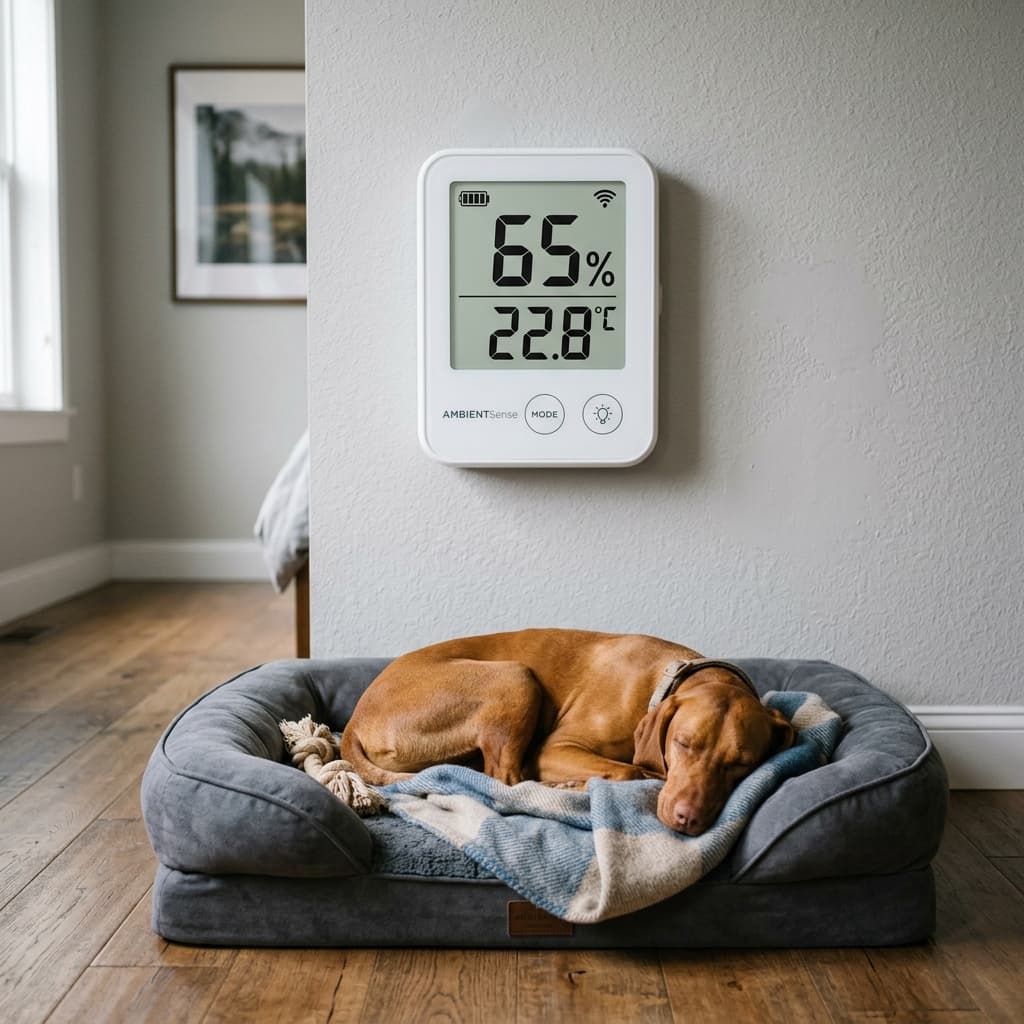
Understanding Smart Pet Room Humidity & Temperature Monitors
Leaving your dog alone in an apartment during late monsoon storms carries a hidden anxiety: what happens if the power trips, the air conditioner cuts out, and the room spikes to 36 degrees with 90% humidity?
Canine heat stroke and respiratory mold sensitivity occur silently indoors when ventilation fails. High humidity fosters rapid Aspergillus and Cladosporium mold growth in corners and bedding, triggering chronic coughing, eye discharge, and fungal allergies in home-alone pets.
Key Factors when Evaluating Smart Pet Room Humidity & Temperature Monitors
Most human apartment wall thermostats are positioned 5 feet off the ground near hallways, completely missing the microclimates where pets actually exist. In modern apartments, cool air sinks while humid, stagnant pockets linger around floor cushions, pet crates, and corners.
A smart wireless pet monitor placed directly at your dog's bed level gives you ground-truth environmental data. If an afternoon thunderstorm causes a localized power outage or trips your AC unit while you are at work, your phone buzzes immediately, allowing you to notify building management or rush home before heat exhaustion sets in.
- Sensor precision engineering: High-accuracy Swiss Sensirion chips measure temperature within plus-or-minus 0.3 degrees Celsius and humidity within 3% RH.
- Remote push notifications: Delivers immediate app alerts to your smartphone if temperature exceeds 28 degrees Celsius or humidity surges past 65% RH.
- Smart home automation integration: Pairs with smart plugs to automatically trigger dehumidifiers or exhaust fans the instant humidity exceeds safe limits.
- Floor-level data logging: Provides historical 24-hour graphing to expose microclimate hot spots exactly where your dog rests during the day.
Top Picks for Smart Pet Room Humidity & Temperature Monitors
Govee WiFi Thermometer Hygrometer Sensor (H5179)
₹₹Best for: The gold standard for reliable smartphone alerts and historical data tracking
Features an ultra-clear LCD screen, built-in Swiss sensor, and direct 2.4GHz WiFi connectivity that sends instantaneous alerts anywhere in the world.
Pros
- Direct WiFi connectivity without an extra hub
- Instant push alerts to smartphone
- Free 2-year cloud data logging
Tradeoffs
- Requires strong home WiFi signal at the sensor location
SwitchBot Indoor Smart Hygrometer Thermometer Meter Plus
₹₹Best for: Smart home automation with large 3-inch comfort indicator screen
A crisp 3-inch e-ink style display with quick visual comfort smileys, Bluetooth tracking, and seamless integration with SwitchBot smart plugs.
Pros
- Huge easy-to-read screen
- Pairs with smart plugs to automate fans
- Extremely long battery lifespan
Tradeoffs
- Requires optional SwitchBot Hub for remote out-of-home alerts
Who Will Benefit Most
Place the sensor approximately 12 to 18 inches off the floor right beside your dog's favorite resting spot, away from direct sunlight or cooling drafts.
Set your high-humidity alert threshold at 65% RH and your high-temperature alert threshold at 27.5 degrees Celsius for double-coated breeds.
When to Consider Alternatives
Do not rely solely on analog dial hygrometers; they drift significantly over time and cannot send remote alerts if conditions deteriorate while you are away.
Avoid mounting the monitor directly inside metal pet crates where metal framing can block wireless radio transmissions.
Important Considerations Before Buying
- Verify that the sensor uses standard replaceable AAA batteries that last at least 12 months rather than obscure proprietary button cells.
- Pair your smart monitor with an automated smart plug connected to a mechanical dehumidifier for seamless climate self-regulation.
- Check the app connectivity once a month to ensure building internet updates have not disconnected the device.
- Maintain indoor relative humidity consistently between 45% and 55% for optimal canine respiratory health.
Practical Tips for Daily Use
- Calibrate the sensor out of the box using the manufacturer app's simple offset adjustment if needed.
- Use historical data graphs to pinpoint which room in your apartment stays naturally coolest throughout sunny afternoons.
- Set up secondary emergency phone alerts so a family member also receives notifications if you are stuck in meetings.
- Clean the sensor casing with a dry microfiber cloth to keep dust out of the sensitive intake vents.
Final Recommendations on Smart Pet Room Humidity & Temperature Monitors
Setting up a Govee WiFi monitor beside Shiro's bed took away all the background anxiety of leaving him home during unpredictable late-monsoon weather.
We know the exact temperature and humidity of his room at a glance, keeping his space safe, dry, and deeply comfortable.
Share this guide
Found this useful? Share it with other dog parents.
Share this guide: