Winter Coat Blowout & Static Dander: Deshedding Rakes and Leave-In Moisturizing Sprays
Some links on this site may be affiliate links. As an Amazon Associate, we may earn from qualifying purchases at no extra cost to you.
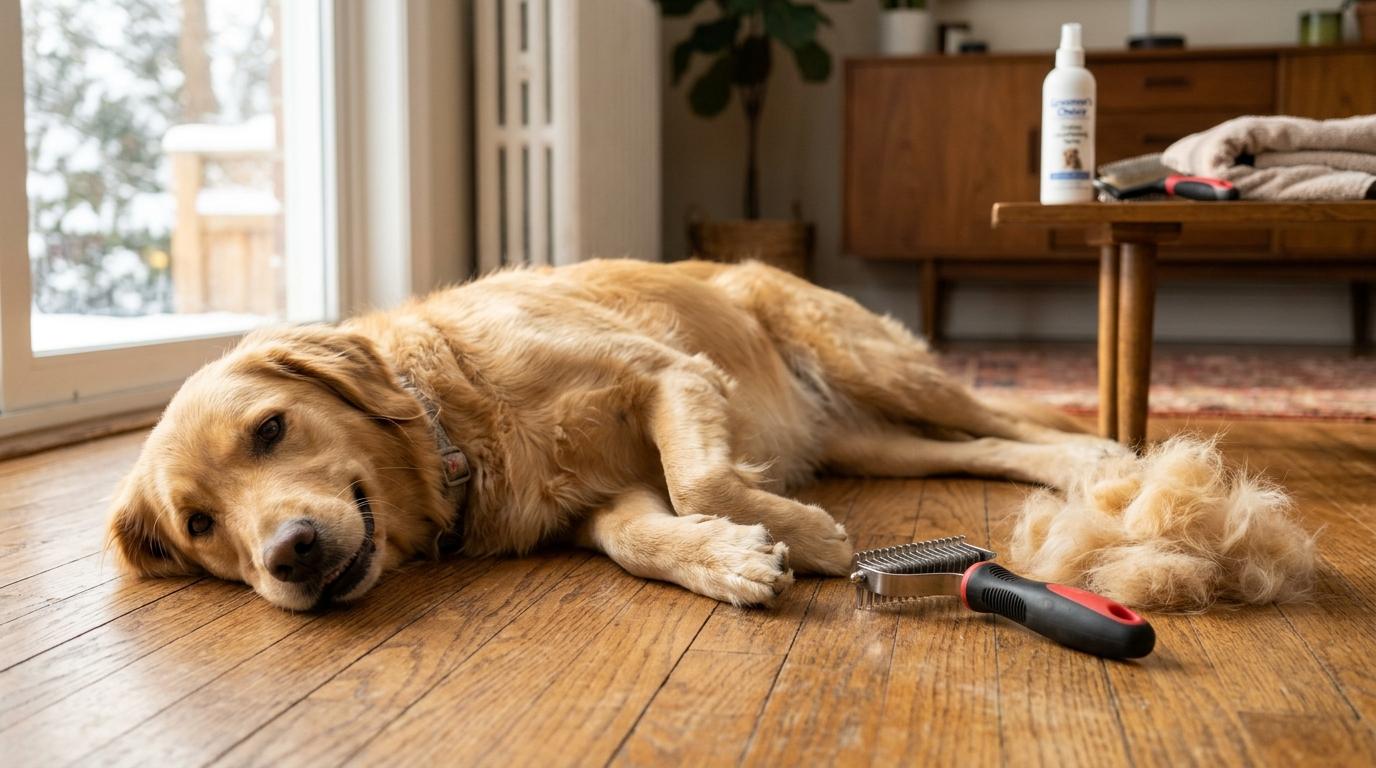
Understanding Winter Coat Blowout & Static Dander
Right around the final week of October, you might notice your living room rugs developing a pale blonde haze of floating tumbleweed fur.
As temperatures drop into the mid-teens, double-coated dogs drop their fine summer undercoat in dramatic clumps to make room for a dense, water-repellent winter fleece. Indoor heating and dry winter humidity cause static electrical sparks every time you touch your dog's back, while the dry air parches the skin barrier into itchy white dander flakes.
Key Factors when Evaluating Winter Coat Blowout & Static Dander
During Shiro's second autumn, we made the classic beginner mistake of giving him weekly warm baths to wash away the shedding fur. Within two weeks, his skin turned dry, pink, and intensely itchy, dusting our dark sofa with fine dander whenever he scratched. Our veterinarian explained that warm water washes away the skin's natural protective sebum just when low indoor humidity is already dehydrating the epiderm. The real secret is dry undercoat extraction paired with a moisturizing spray.
Using an undercoat rake with smooth, rotating round-tipped pins changed everything. The rotating pins allow the tool to separate packed mats behind the ears and around the thighs without pulling or pinching. A light mist of an anti-static conditioning spray before each session prevents fur from flying into the air and keeps the coat silky, supple, and static-free.
- Rotating smooth steel teeth glide through packed undercoat without scraping sensitive skin or snagging guard hairs.
- Leave-in oatmeal and aloe conditioning mists restore the protective lipid barrier and eliminate crackling static electricity during brushing.
- Over-bathing in dry winter weather strips essential natural sebum; targeted daily 10-minute line combing is far healthier than frequent wet shampooing.
- A slicker brush with coated safety pins works well for light surface fluff, but only an undercoat rake reaches down to remove dead impacted fleece.
Top Picks for Winter Coat Blowout & Static Dander
Furminator Undercoat Deshedding Tool for Large Longhair Dogs
₹₹₹Best for: Reaching deep into dense double coats to capture dead undercoat before it drops
Stainless steel deshedding edge reaches through topcoat to safely remove loose undercoat hair without cutting skin or damaging delicate guard hairs.
Pros
- Furadae ejector button cleans teeth instantly
- Ergonomic rubberized grip
- Cuts indoor shedding volume drastically
Tradeoffs
- Requires gentle pressure to prevent brush burn
- Not for detangling severe knots
Bio-Groom Silk Conditioning Creme Rinse and Leave-In Moisturizer
₹₹Best for: Eliminating winter static electricity and repairing parched coat cuticles
Enriched with chamomile, silk proteins, and hydrolyzed wheat protein. Calms static charge instantly, leaving coats glossy and tangle-free with a clean scent.
Pros
- Zero oily residue
- Neutralizes static sparks instantly
- Gentle on sensitive canine skin
Tradeoffs
- Concentrated formula requires diluting with water in spray bottle
Wahl Oatmeal Extract Dog Leave-In Conditioning Spray
₹Best for: Instant daily hydration between walks to soothe dry winter itching
Formulated with colloidal oatmeal, aloe vera, and provitamin B5. Restores moisture directly to flaky skin patches while repelling ambient dust.
Pros
- Very affordable
- Natural plant-based botanicals
- Mild pleasant coconut oatmeal scent
Tradeoffs
- Spray nozzle produces a narrow stream if not misted from 12 inches away
Who Will Benefit Most
Buy an undercoat rake with rotating round-end pins if your dog has a sensitive back or has shown fear around traditional sharp slicker brushes.
Keep a spray bottle of diluted leave-in conditioner right beside your grooming station so you never brush dry, brittle winter fur without light lubrication.
When to Consider Alternatives
Never use human anti-static sprays or fabric softeners on dog coats; they contain quaternary ammonium compounds that cause acute oral toxicity when dogs lick their fur.
Avoid bladed de-matting tools with razor edges unless you have hands-on training, as sudden head turns can cause accidental skin lacerations.
Important Considerations Before Buying
- Always brush in the direction of natural hair growth, working in 2-inch horizontal strips from the belly upward toward the spine.
- Inspect the skin around the groin and armpits after walks for tiny dry burrs or seed pods that nestle into winter feathering.
- Check your vacuum cleaner brush roll every three days during November; long golden undercoat hair quickly wraps around roller bearings.
- Supplement your dog's evening meal with high-potency wild salmon oil to give hair follicles the essential omega-3 fatty acids needed for winter coat density.
Practical Tips for Daily Use
- Mist the coat lightly until damp to the touch before grooming; the moisture weighs down loose hairs so they gather on the comb instead of floating in the room.
- Place a high-velocity pet dryer on its cool setting on the balcony once a week to blast out lingering dead undercoat and dust in under five minutes.
- Keep a damp microfiber cloth handy to wipe down the dog's back after brushing to catch remaining loose hairs through electrostatic adhesion.
- Reward your dog with a healthy dried lamb liver treat every few minutes to make winter grooming a calm, enjoyable bonding ritual.
Final Recommendations on Winter Coat Blowout & Static Dander
The November coat blow does not have to turn your apartment into a snowstorm of golden fur.
With a quality undercoat rake and two minutes of daily moisturizing spray, Shiro's coat stays thick, glossy, and static-free through the coldest months.
Share this guide
Found this useful? Share it with other dog parents.
Share this guide: