Best Feeding Mats for Dogs That Reduce Mess Around the Bowl
Some links on this site may be affiliate links. As an Amazon Associate, we may earn from qualifying purchases at no extra cost to you.
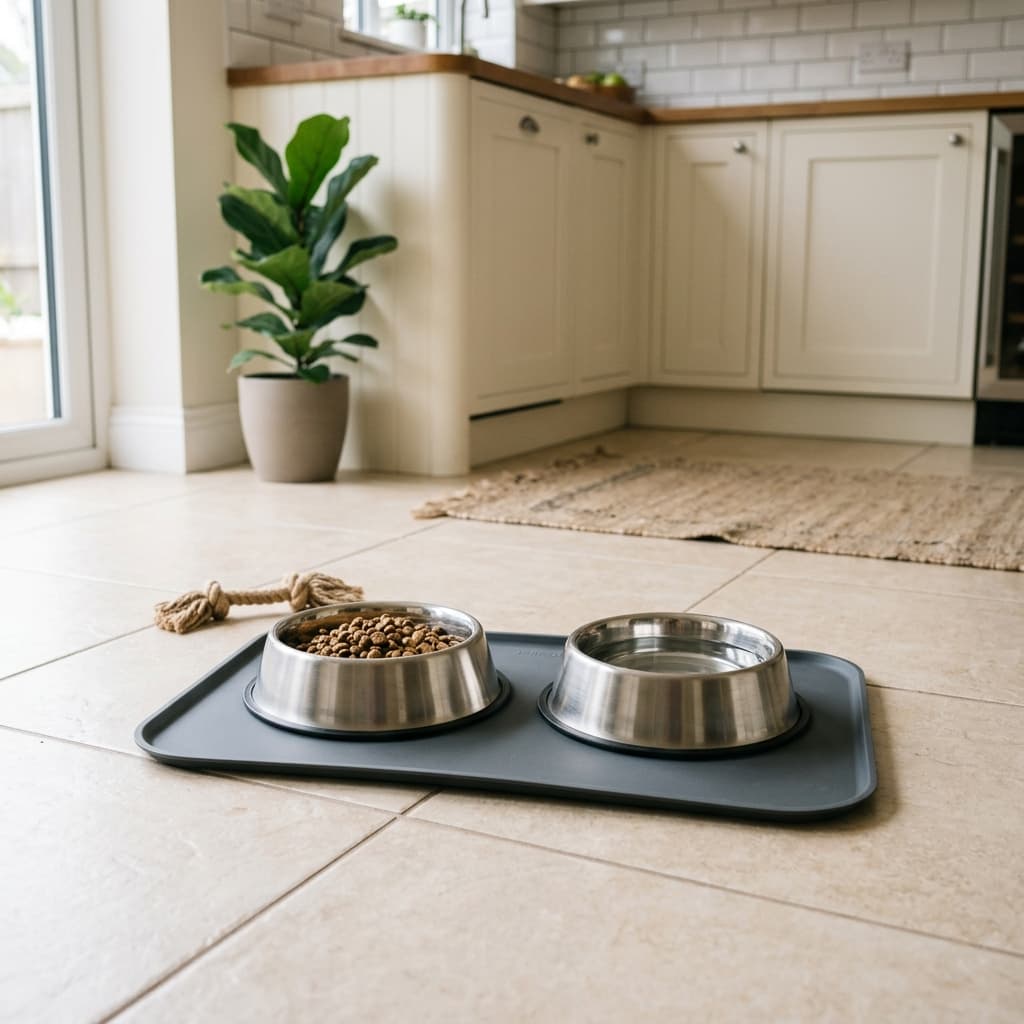
Understanding Best Feeding Mats for Dogs That Reduce Mess Around the Bowl
A feeding mat is one of the lowest-cost, highest-usefulness upgrades in a dog home. Without one, the area around the bowl becomes a rotating source of scattered kibble, dried water rings, and floor staining that has to be cleaned individually after every meal.
Most dog owners simply place the bowl on the floor and then wipe the surrounding area when it gets noticeably dirty, which means more frequent deep cleaning and a floor zone that is never quite clean between sessions.
Key Factors when Evaluating Best Feeding Mats for Dogs That Reduce Mess Around the Bowl
The main split in feeding mat design is between flat fabric mats and raised-edge silicone trays. Fabric mats absorb water and can trap kibble in the weave, making them more effort to clean. Silicone trays with a lip contain spills as a unit and can be rinsed in five seconds at the sink.
For households that want to clean after every single meal without it feeling like a task, silicone is the more practical choice. For households that are fine with a weekly machine wash, a fabric or microfiber mat may fit the aesthetic and routine better.
- Non-slip backing is essential, a mat that slides when the dog nudges the bowl creates more mess than no mat.
- Raised edges catch water splash and spilled kibble far better than flat mats.
- Material affects cleaning time: silicone wipes in seconds; fabric requires a sink rinse or machine wash.
- Mat size should extend at least six to eight inches beyond the bowl on all sides.
Top Picks for Best Feeding Mats for Dogs That Reduce Mess Around the Bowl
Raised-Edge Silicone Feeding Tray
$Best for: Fast daily cleanup with no laundry
A solid silicone tray with a one-inch raised border that contains water splash and scattered kibble, rinsable under tap water in seconds.
Pros
- Extremely easy to clean
- Non-slip base
- Durable and odour-resistant
Tradeoffs
- Less visually appealing than fabric options
- Some dogs peel or chew silicone edges
Waterproof Microfiber Mat with Raised Lip
$$Best for: Homes that prefer a softer aesthetic at the feeding station
A fabric-topped mat with a waterproof backing and a small woven raised edge that absorbs light splash while remaining soft and non-scratchy on hard floors.
Pros
- Better home aesthetic
- Non-slip backing
- Machine washable
Tradeoffs
- Requires washing rather than a quick rinse
- May not handle very heavy water splash as well as silicone
Large Flat Non-Slip Feeding Mat
$Best for: Multiple bowl setups or dogs that eat with wide movement
A generous-sized flat mat that covers a wide feeding zone, suitable for households using two bowls, improved stands, or dogs that move around significantly while eating.
Pros
- Covers more floor area
- Good for multi-dog setups
- Easy to shake out and spot clean
Tradeoffs
- No raised edge, so liquid spills spread to the edge
- Needs more regular cleaning frequency
Who Will Benefit Most
A feeding mat is a worthwhile buy for any household where the floor around the bowl is a daily cleaning concern. The time saved on floor wiping alone makes it a practical purchase within the first week.
It’s especially valuable on hard floors like tile or wood where dried water and kibble residue are both visible and difficult to address without getting down on hands and knees. A mat turns a recurring floor-cleaning chore into a thirty-second wipe after every meal.
When to Consider Alternatives
Skip decorative or thin fabric mats if your dog is a heavy drinker or a messy eater. Thinner mats become saturated quickly and develop odour from absorbed water if not washed frequently.
Also skip very small mats that barely fit under the bowl. The purpose of the mat is to contain mess beyond the bowl footprint, and a mat that only covers the bowl base captures almost nothing.
Important Considerations Before Buying
- Measure the full feeding zone, including water and food bowls, before selecting mat size.
- Check that the mat doesn’t curl at the corners, as curled edges become tripping hazards for both dogs and people.
- If using an improved stand, verify that the mat footprint matches the stand's base dimensions.
- Replace mats when they develop persistent staining, peeling, or odour that washing doesn’t resolve.
Practical Tips for Daily Use
- Rinse or wipe the mat after every meal rather than letting residue build up.
- Keep a dedicated small brush or sponge near the feeding zone for thirty-second post-meal wipes.
- Lift the mat and check under it weekly, moisture can gather underneath even with a waterproof backing.
- If the mat moves during meals, place non-slip pads under the corners rather than replacing the mat.
Final Recommendations on Best Feeding Mats for Dogs That Reduce Mess Around the Bowl
A feeding mat is a simple product with an outsized daily impact in any dog home. It turns one of the most repetitive floor-cleaning tasks into a thirty-second wipe, which means it actually gets done consistently rather than deferred until the mess becomes visible from a distance.
Choosing based on material and cleanup ease rather than looks make sures the mat earns its place on the floor every single mealtime.
Share this guide
Found this useful? Share it with other dog parents.
Share this guide: