Elevated Ergonomic Dog Bowls for Large & Senior Breeds: Relieving Neck and Elbow Strain on Cold Tiles
Some links on this site may be affiliate links. As an Amazon Associate, we may earn from qualifying purchases at no extra cost to you.
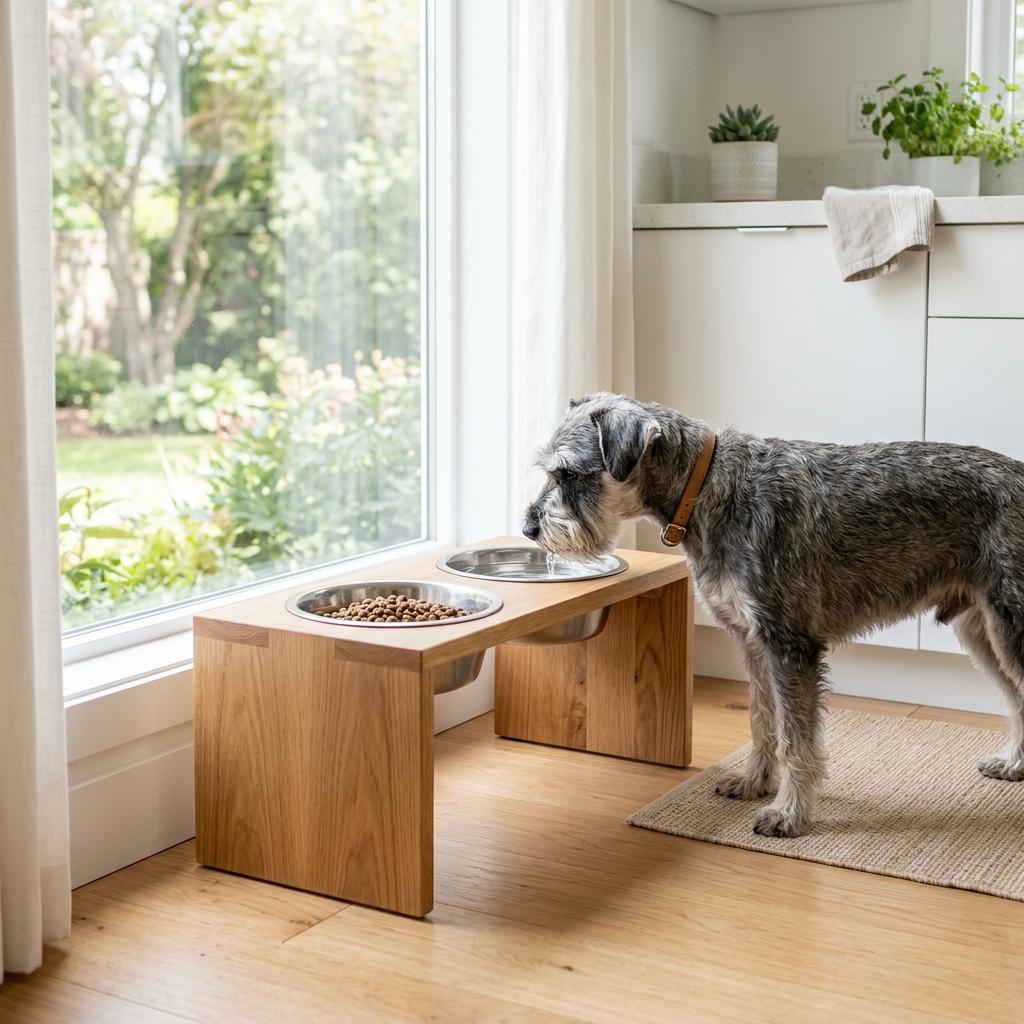
Understanding Elevated Ergonomic Dog Bowls for Large & Senior Breeds
Watch your dog carefully the next time they eat from a bowl on the floor: notice how a large dog must spread their front legs wide and arch their lower spine just to reach ground level.
For tall breeds like Golden Retrievers, Labradors, and German Shepherds, crouching down to floor-level bowls places immense downward compressive force on cervical vertebrae and elbow joints. On cold, slick marble floors in winter, their front paws frequently slide outward during meals. For dogs with early arthritis or hip dysplasia, maintaining this awkward crouched posture three times a day causes genuine physical discomfort.
Key Factors when Evaluating Elevated Ergonomic Dog Bowls for Large & Senior Breeds
When Shiro's hip dysplasia diagnosis came through, our veterinary orthopedic specialist reviewed our home environment and immediately asked how high his food and water bowls were. At the time, they were sitting flat on the kitchen tile. The vet explained that every time Shiro lowered his 34kg frame to eat, he shifted seventy percent of his body weight onto his front elbows and strained his lumbar spine to stabilize his hips on the slick floor.
We purchased an adjustable elevated steel diner and set it to 12 inches high, perfectly aligned with the lower curve of his chest. The change in his body language was dramatic. Shiro no longer had to splay his legs wide like a giraffe at a watering hole; he stood square, balanced, and completely relaxed throughout meals. He ate with greater ease, and we noticed zero post-meal joint stiffness.
- Raising the bowl to mid-chest level eliminates 80 percent of neck bending and spinal curvature during mealtime.
- A natural standing posture prevents dogs from splaying their front legs outward on slippery marble tiles.
- Adjustable stands allow you to fine-tune bowl height as your dog matures from adolescence into senior years.
- Heavy weighted bases and rubberized foot grips prevent enthusiastic dogs from pushing the feeding station across the room.
Top Picks for Elevated Ergonomic Dog Bowls for Large & Senior Breeds
PetZone Designer Diner 3-in-1 Adjustable Elevated Dog Bowls
₹₹Best for: Versatile growth and comfort with three easily adjustable height settings
Adjusts smoothly between 2.75 inches, 8 inches, and 12 inches high. Folds completely flat for travel storage and includes two rust-resistant stainless steel bowls.
Pros
- Three adjustable height positions
- Folds flat for compact travel
- Dishwasher safe stainless bowls
Tradeoffs
- Plastic legs require checking latch locks during setup
Platinum Pets Modern Double Diner Elevated Stand with Wide Rim Bowls
₹₹₹Best for: Rock-solid wrought iron stability that will never tip over on slick tiles
Crafted from heavy powder-coated wrought iron with silicone rim rings that eliminate rattling noises while dogs eat. Non-skid rubber feet lock firmly onto tile.
Pros
- Wrought iron weight prevents sliding
- Rattle-free silicone bowl dampeners
- Scratch-resistant powder coating
Tradeoffs
- Fixed height requires precise measurement before ordering
Loving Pets Black Label Vintage Diner Dog Feeder
₹₹Best for: Classic retro aesthetic with durable resin construction and rubber base
Combines an attractive crescent-shaped composite resin base with rubber footing. Easily wiped clean and keeps feeding zones tidy.
Pros
- Sturdy resin build
- Attractive living room look
- Removable stainless steel bowls
Tradeoffs
- Single fixed height tier
Who Will Benefit Most
Measure your dog from the floor to the point of their shoulder while standing square, then subtract 6 inches to determine the ideal bowl rim height.
Look for stands with silicone or rubber ring gaskets around the bowl cutouts; metal-on-metal rattling sounds can make sound-sensitive dogs nervous about eating.
When to Consider Alternatives
Avoid lightweight plastic feeding stands that slide across marble floors whenever your dog takes a bite; stands must have heavy rubberized foot grips.
Do not elevate bowls excessively high (above shoulder level); bowls should sit at lower-to-mid chest level to allow natural swallowing mechanics.
Important Considerations Before Buying
- Place an absorbent silicone or rubber mat underneath the elevated stand to catch water drips and protect apartment floors from moisture.
- Wash the stainless steel bowls in hot soapy water or the dishwasher daily; bacterial biofilm forms rapidly on bowl walls regardless of elevation.
- For deep-chested breeds with high bloat risk, consult your veterinarian regarding meal pacing and post-meal rest periods.
- Ensure the stand does not wobble; check leg levelers on uneven rustic tiles to ensure rock-solid stability.
Practical Tips for Daily Use
- Set up the stand in a calm, low-traffic kitchen or hallway corner so your dog can dine without feeling crowded or startled.
- Keep food and water at the same elevated height so your dog can transition seamlessly between bites and sips.
- Wipe down the underside of the stand weekly to prevent pet hair and dust bunnies from accumulating behind the legs.
- If traveling, choose a folding model like the PetZone Diner so your senior dog maintains their ergonomic setup away from home.
Final Recommendations on Elevated Ergonomic Dog Bowls for Large & Senior Breeds
Elevating Shiro's bowls was one of the simplest, most impactful physical changes we ever made to his daily routine.
He eats with relaxed dignity, his posture is upright and confident, and his joints remain completely comfortable from the first bite to the last.
Share this guide
Found this useful? Share it with other dog parents.
Share this guide: