Winter Canine Dehydration & Tooth Sensitivity: Thermal Warm-Water Bowls and Lick-Mat Hydration Routines
Some links on this site may be affiliate links. As an Amazon Associate, we may earn from qualifying purchases at no extra cost to you.
Understanding Winter Canine Dehydration & Tooth Sensitivity
When cold weather arrives, most pet parents worry about warm jackets and drafty floors, but very few notice the silent threat quietly unfolding inside the water bowl.
When ambient room temperatures plunge to 14°C, tap water inside apartment pipes turns ice-cold. For older dogs or dogs with mild dental wear, drinking chilly water triggers sharp tooth sensitivity nerve pain. Dogs quickly start taking brief, reluctant sips rather than deep, refreshing drinks. Over several weeks, chronic low-grade winter dehydration concentrates urine, triggering bladder irritation and painful urinary tract crystals.
Key Factors when Evaluating Winter Canine Dehydration & Tooth Sensitivity
Last November, we noticed Shiro's water bowl sitting almost full at the end of the day. At first, we assumed he simply felt less thirsty because summer heat was gone. But on his evening walk, his urine was dark amber, and he took multiple strained postures to pee. Our vet checked him and pointed out the obvious: the tile floor had turned his steel bowl into a mini refrigerator, chilling the water to 12°C. Shiro has a slightly worn rear premolar, and the icy water was causing him genuine dental discomfort.
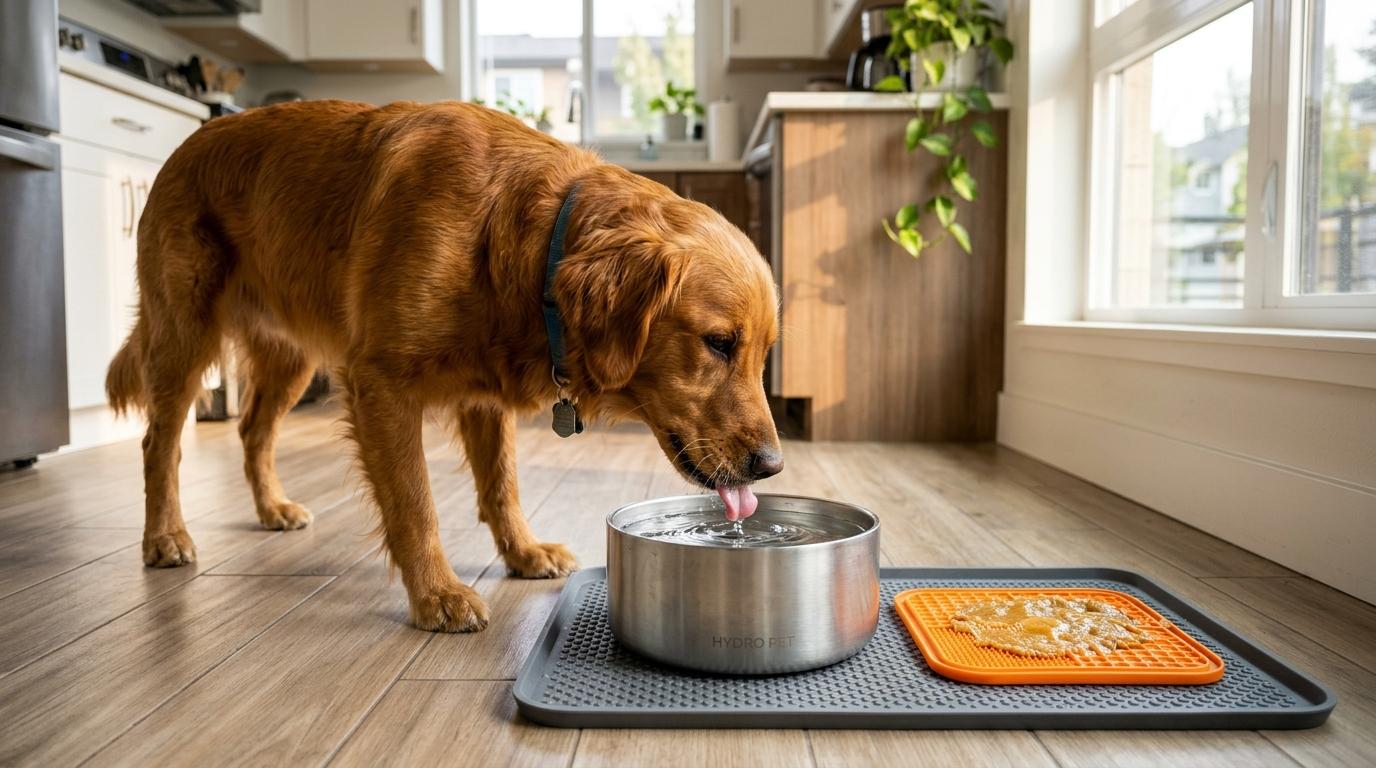
We immediately switched him to a double-walled insulated pet bowl and started offering a cup of warm, low-sodium chicken bone broth poured over his kibble twice a day. The change was instant. He drank every drop eagerly, his urine turned light straw yellow again within twenty-four hours, and his energy levels bounced right back.
- Insulated double-walled stainless steel or heavy ceramic maintains water at a comfortable 20°C room temperature for hours.
- Standard single-layer stainless bowls act as rapid heat sinks, chilling water to apartment floor temperatures within thirty minutes.
- Lick mats encourage rhythmic fluid ingestion through gelatinous broth toppers, hydrating dogs that refuse plain standing water.
- Warm water releases volatile aroma molecules in food, boosting sluggish morning appetites without synthetic flavor enhancers.
Top Picks for Winter Canine Dehydration & Tooth Sensitivity
PetSafe Drinkwell Ceramic Pagoda Pet Water Fountain
₹₹₹Best for: Maintaining clean, room-temperature circulating water that resists chilling
Heavy glazed ceramic construction insulates against cold ambient floor temperatures. Dual free-falling water streams oxygenate the water and entice reluctant drinkers.
Pros
- Heavy ceramic prevents floor tipping
- Charcoal filtration captures dust
- Hygienic and naturally non-porous
Tradeoffs
- Heavier to carry to the sink
- Pump needs monthly cleaning
KONG Classic Silicone Lick Mat with Suction Backing
₹Best for: Hydrating through warm broth purées and soothing indoor smog restlessness
Food-grade silicone mat with varied textural quadrants. Spreading warm bone broth or pumpkin purée encourages 15 minutes of continuous calming licking.
Pros
- Promotes gentle fluid absorption
- Releases calming endorphins
- Dishwasher safe
Tradeoffs
- Requires thorough rinsing in corners
Pidan Double-Walled Thermal Insulated Stainless Steel Pet Bowl
₹₹Best for: Preventing floor drafts from chilling drinking water in cold apartments
Vacuum-insulated dual stainless steel walls maintain water temperature without sweating. Elevated 15-degree tilt reduces neck strain for senior dogs.
Pros
- Vacuum insulation keeps water tepid
- Stable non-skid silicone base
- High-grade 304 stainless steel
Tradeoffs
- Slightly smaller volume for giant breeds
Who Will Benefit Most
Select an insulated ceramic or double-walled bowl if you have cold marble, granite, or tile flooring that leaches heat from pet dishes.
Keep a dedicated electric kettle in your kitchen to warm half a cup of filtered water to mix into morning pet meals.
When to Consider Alternatives
Do not offer piping hot broth or boiling water; test temperature with the inside of your wrist just like baby formula before placing the bowl down.
Avoid plastic lick mats with sharp edges; dogs can chew pieces off if left unattended once food is completely finished.
Important Considerations Before Buying
- Monitor your dog's urine color: healthy canine hydration produces clear, pale straw-yellow urine without strong pungent odor.
- Elevate the water station on a thick cork or wooden coaster to break thermal conduction from freezing floor tiles.
- Wash water fountains weekly; cooler weather does not stop bacterial biofilm from forming on internal submersible pump parts.
- Offer small sips of warm water before and after chilly evening walks to ease throat dryness.
Practical Tips for Daily Use
- Warm homemade bone broth in a mug for 20 seconds in the microwave before pouring it over evening dinner to create an aromatic gravy.
- Freeze warm diluted broth cubes in silicone trays to drop into tepid water as a floating hydration game.
- Supervise lick mat sessions and pick the mat up as soon as your dog finishes the food to preserve it for future training.
- Place a second water bowl near your dog's primary sleeping bed so they can drink comfortably without walking across dark, cold hallways.
Final Recommendations on Winter Canine Dehydration & Tooth Sensitivity
Keeping your dog properly hydrated through November takes just a few thoughtful adjustments to temperature and presentation.
With warm broth toppers and an insulated bowl, Shiro stays vibrant, his joints stay lubricated, and urinary worries disappear completely.
Share this guide
Found this useful? Share it with other dog parents.
Share this guide: