Winter Paw Pad Care: Soot Detox Foams, Organic Beeswax Salves, and Road Grit Protection
Some links on this site may be affiliate links. As an Amazon Associate, we may earn from qualifying purchases at no extra cost to you.
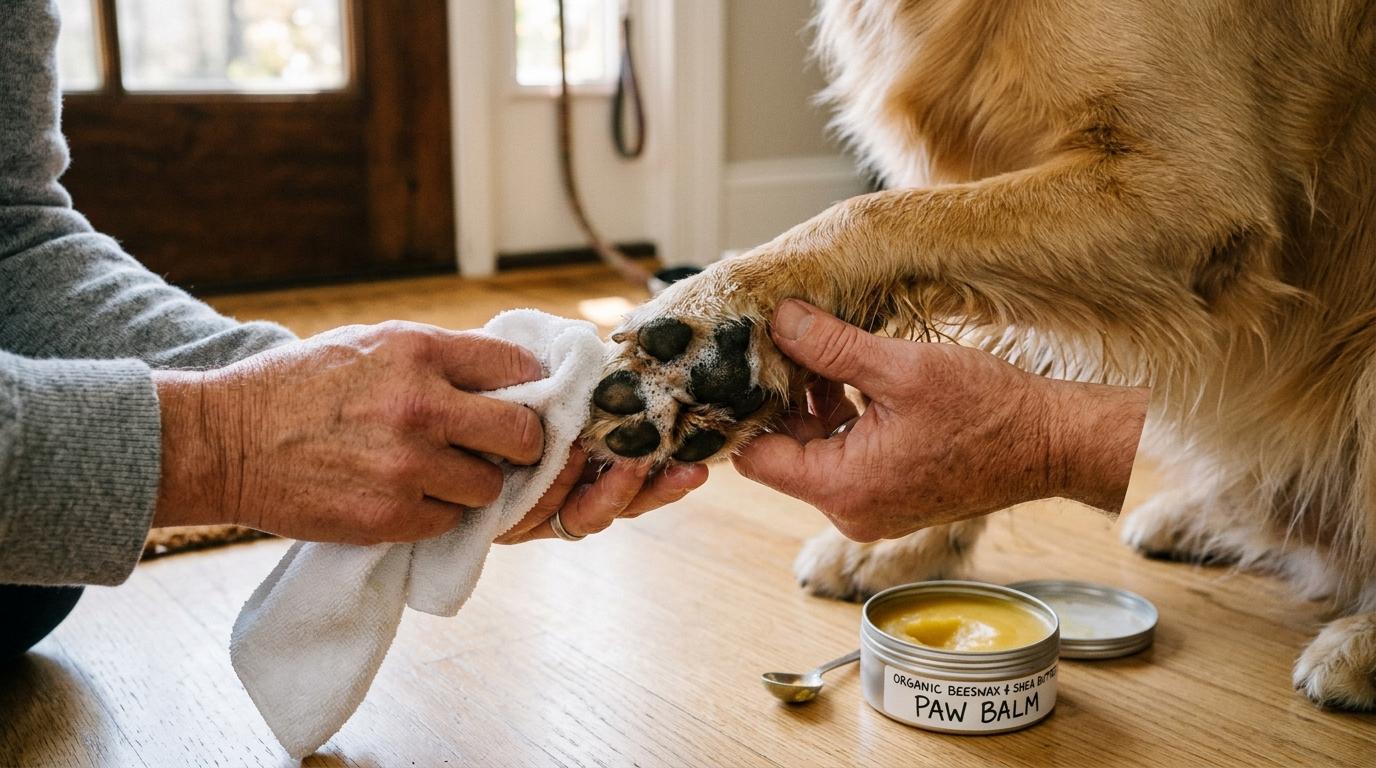
Understanding Winter Paw Pad Care
When you step outside onto city sidewalks in mid-November, look closely at the soles of your shoes: within ten minutes, they are coated in a fine, greasy black layer of toxic street soot.
Dogs walk barefoot directly across this gritty, soot-covered pavement. As ambient humidity drops below 30 percent, paw pad leather loses its natural elasticity and develops microscopic fissures. Toxic particulates, unburned hydrocarbons, and sharp construction dust embed themselves deep inside these cracks. When your dog licks their paws clean back in the apartment, they ingest concentrated toxins that cause stomach inflammation and chronic paw-chewing dermatitis.
Key Factors when Evaluating Winter Paw Pad Care
Last November, Shiro started persistently licking his front paws every evening while resting by my desk. When I inspected his pads under a bright flashlight, the leather was rough like coarse sandpaper, with several hairline cracks packed with dark, greasy street dust. Washing his paws in a cold water bucket only made matters worse: the repeated wet-and-dry cycles in cold air sucked out whatever remaining natural moisture his pads had, causing one crack to bleed lightly.
Our vet advised us to stop cold water bucket washes entirely. Instead, we keep a pump bottle of rinse-free antimicrobial cleansing foam and a microfiber cloth right inside the shoe rack. A gentle 30-second wipe removes every trace of black street soot. We follow up each night with a pea-sized dab of organic beeswax and calendula butter massaged into each pad. Within five days, Shiro's paw pads were supple, dark, and smooth as glove leather, and his evening licking habit vanished completely.
- Waterless antimicrobial foams lift sticky oily soot from paw crevices without soaking pads in cold tap water.
- Dense beeswax and shea butter salves form a breathable, non-slip protective shield that locks in natural moisture.
- Traditional petroleum jelly rubs off on living room rugs and causes loose stools when ingested during self-grooming.
- Daily post-walk paw wiping stops toxic particulate ingestion before your dog can begin licking their paws on the sofa.
Top Picks for Winter Paw Pad Care
Musher's Secret All-Season Pet Paw Protection Wax
₹₹₹Best for: The gold standard in breathable, 100% natural semi-permeable paw pad protection
Made from white and yellow beeswax, candelilla wax, and vitamin E. Absorbs quickly into pad tissue to form a flexible shield against hot roads, icy slush, and abrasive sand.
Pros
- 100% natural and food-grade safe
- Does not stain rugs or furniture
- Long-lasting protection
Tradeoffs
- Higher upfront cost per jar
Captain Zack Pawsitively Smooth Natural Paw Butter
₹Best for: Fast daily hydration and healing of dry, rough, and cracked canine paws
Formulated with mango butter, shea butter, almond oil, and lemongrass essential oil. Deeply moisturizes chapped pads while naturally repelling ticks and fleas.
Pros
- Very affordable domestic Indian brand
- Pleasant natural citrus aroma
- Deeply moisturizing rich butter
Tradeoffs
- Slightly softer texture requires gentle application
Dexas MudBuster Portable Dog Paw Cleaner with Silicone Bristles
₹₹Best for: Quickly removing stubborn outdoor grime from between toes after park walks
Gentle, flexible silicone bristles inside an easy-grip tumbler tumbler. Gently loosens mud and embedded grit from between paw pads without splashing water.
Pros
- Gentle on ticklish paws
- Dishwasher safe silicone array
- Mess-free doorway cleanup
Tradeoffs
- Requires a dry towel on hand to wipe paws afterward
Who Will Benefit Most
Always verify that paw balms use pure food-grade beeswax, shea butter, or coconut oil; dogs will inevitably lick their paws and products must be 100 percent non-toxic.
Apply paw balm right before your dog falls asleep at night so the botanical oils can soak deep into the dermal tissue without being walked off on rugs.
When to Consider Alternatives
Avoid human hand lotions containing propylene glycol, artificial perfumes, or zinc oxide; zinc is highly toxic to dogs if ingested.
Do not clip interdigital paw hair down to the pink skin in winter; leave 2mm of fur to cushion the sensitive webbed skin between pads.
Important Considerations Before Buying
- Check between toes for tiny foxtails, gravel stones, or dry burrs after every evening walk along dusty roadsides.
- If a paw crack looks deep, red, inflamed, or discharges clear serum, clean it with warm saline and consult your vet for an antiseptic ointment.
- Place a washable microfiber mat directly inside the doorway to catch loose street dust before your dog steps onto interior floors.
- Keep your dog's nails trimmed short; long nails spread paw pads wide upon ground contact, exposing soft interdigital skin to rough pavement.
Practical Tips for Daily Use
- Pump one dollop of waterless foam onto a microfiber cloth rather than spraying directly onto the paw to keep sound-sensitive dogs calm.
- Gently spread the toes and wipe the deep central groove between pads where toxic soot accumulates most heavily.
- Warm a thumbnail of beeswax balm between your palms for five seconds before massaging it gently into the pad leather.
- Offer a small crunchy carrot slice or treat right after applying balm to keep your dog distracted while the oils absorb.
Final Recommendations on Winter Paw Pad Care
A dog's paws are their direct connection to the world, and keeping those pads healthy through dry, smoggy winter months takes under sixty seconds a day.
Shiro steps out onto every walk with soft, resilient, crack-free pads, completely protected from harsh city streets.
Share this guide
Found this useful? Share it with other dog parents.
Share this guide: